
HISTORY & TIMELINE
7 August

A journey through
7 August in history

The story of 7 August runs from the crowning of Otto I in Charlemagne’s church at Aachen in 936 to the conviction of two Khmer Rouge leaders in Phnom Penh in 2014. In between come Russia’s first great naval victory at Gangut, Bolívar’s victory at Boyacá, the first recorded game of Australian football, the dedication of the Harvard Mark I, the Guadalcanal landings, the end of the Kon-Tiki voyage, Côte d’Ivoire’s independence, the launch of Explorer 6, Philippe Petit’s walk between the Twin Towers, Viking 2’s arrival at Mars, Lynne Cox’s swim across the Bering Strait and the bombing of two US embassies in East Africa.

II
THE MIDDLE AGES

Medieval History

Kingdoms, conflict, faith, power and the changing medieval world.

936
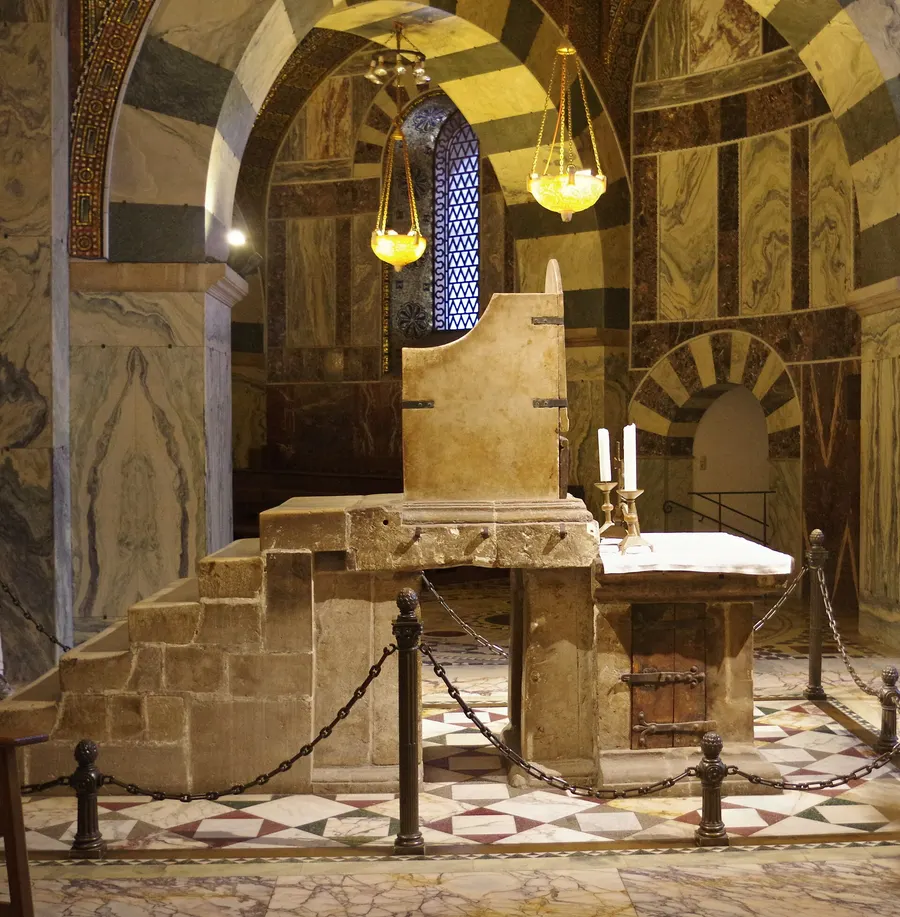
The stone throne of Charlemagne in the gallery of Aachen Cathedral, on which Otto I was enthronedThe stone throne of Charlemagne in the gallery of Aachen Cathedral, on which Otto I was enthronedImage: Berthold Werner · CC BY-SA 3.0
politics · Europe

Otto I is crowned king in Charlemagne’s church at Aachen

Henry I, the Saxon duke who had become king of the East Franks, died in July 936 after naming his son Otto as his successor. The German kingdom was a loose collection of powerful duchies, Franconia, Swabia, Bavaria, Lotharingia and Saxony, and a king needed the dukes’ consent. Otto chose to be made king not in Saxony but at Aachen, in the palace chapel of Charlemagne, the great Frankish emperor whose legacy he meant to claim. On 7 August 936 the dukes and nobles gathered at Aachen raised Otto as their king. He was anointed and crowned by the archbishops of Mainz and Cologne, and, according to the chronicler Widukind of Corvey, enthroned on Charlemagne’s stone throne; at the feast that followed the dukes served him as his household officers. Otto spent years putting down revolts, broke the Magyar raids at the Lechfeld in 955 and was crowned emperor in Rome in 962. For six centuries after him, German kings were crowned at Aachen.

Source: Britannica: Otto I ↗
III
A CHANGING WORLD

Early Modern Era

Exploration, political change, scientific development and expanding global connections.

1714
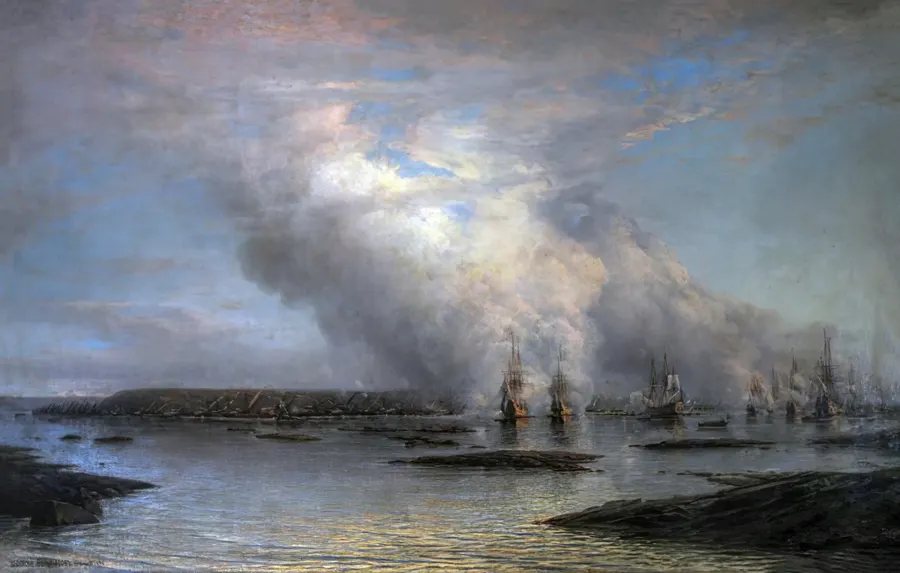
The Battle of Gangut, painted by the Russian marine artist Alexey BogolyubovThe Battle of Gangut, painted by the Russian marine artist Alexey BogolyubovImage: Alexey Bogolyubov · Public domain
world · Europe

Peter the Great’s galleys win Russia’s first naval victory at Gangut

During the Great Northern War, Peter the Great built a fleet of oared galleys to fight Sweden in the shallow, rocky waters off Finland. On 7 August 1714 (27 July in the Old Style calendar then used in Russia), Russian galleys under General-Admiral Fyodor Apraksin, with Peter himself present, attacked a Swedish squadron off the Hanko peninsula at Gangut and captured all ten of its ships. It was the Russian navy’s first major victory, and it opened the way for Russian landings on the Finnish and Swedish coasts.

Source: Presidential Library of Russia: Battle of Gangut, the first triumph of the Russian fleet ↗
IV
THE NINETEENTH CENTURY

The 1800s

Industry, empire, invention, reform and a century of enormous transformation.

1819
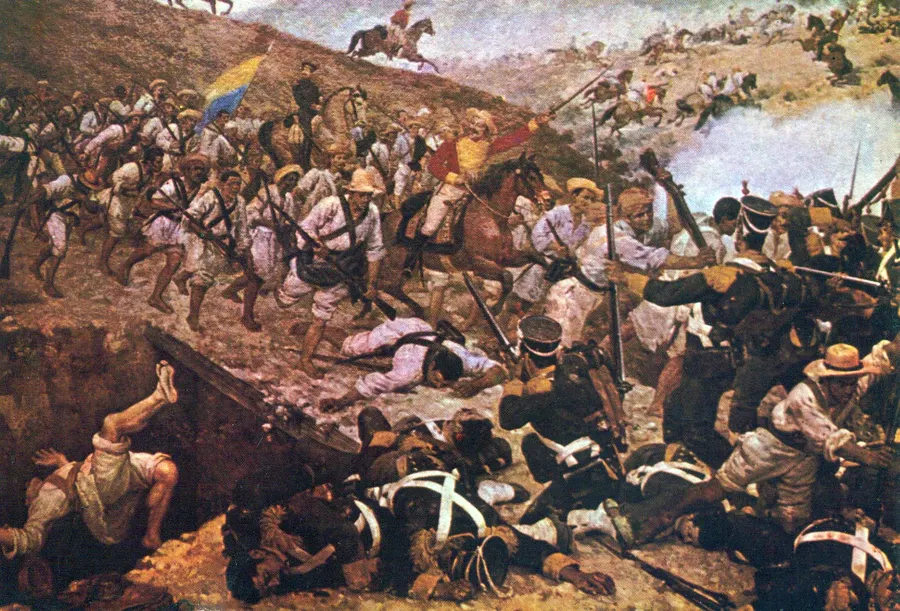
The Battle of Boyacá as painted by the Venezuelan artist Martín Tovar y TovarThe Battle of Boyacá as painted by the Venezuelan artist Martín Tovar y TovarImage: Martin Tovar y Tovar · Public domain
world · Americas

Bolívar wins the Battle of Boyacá and frees New Granada

By 1819 Spain had crushed the first independence movements in New Granada, the viceroyalty that covered much of today’s Colombia, and Simón Bolívar was fighting on in the plains of Venezuela. In the rainy season of that year he did something the Spanish did not expect: he led his army west across the flooded plains and over the high, freezing passes of the Andes, losing many men and most of his horses, to join Francisco de Paula Santander’s forces and descend on the heart of New Granada. On 7 August 1819, at a bridge over the Boyacá river on the road to Bogotá, about 3,000 patriot troops met a royalist army of similar size under Colonel José María Barreiro. Santander’s vanguard cut off the Spanish advance guard at the bridge while Bolívar attacked the main body half a mile away, and the royalists broke. Barreiro and about 1,800 of his men were taken prisoner. Three days later Bolívar rode into Bogotá, the viceroy having fled, and Boyacá opened the way to the independence of Colombia. The day is still a national holiday there.

Source: Britannica: Battle of Boyacá ↗
1858
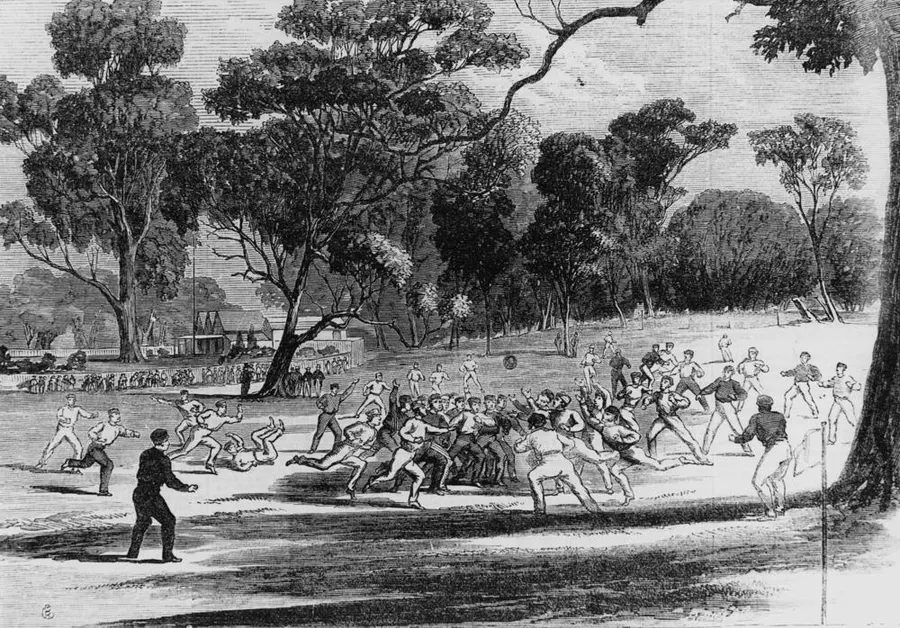
Football at the Richmond Paddock beside the Melbourne Cricket Ground, in a wood engraving by Robert Bruce from about 1866Football at the Richmond Paddock beside the Melbourne Cricket Ground, in a wood engraving by Robert Bruce from about 1866Image: Robert Bruce (c.1839-1918) · Public domain
sport · Oceania

Scotch College and Melbourne Grammar play the first recorded game of Australian football

In the 1850s the gold rush was swelling Melbourne with young men, and football was played there by whatever rules each group agreed on the day. Tom Wills, a champion cricketer who had been schooled at Rugby in England, suggested in 1858 that a football club would keep cricketers fit through the winter, and that year he helped organise a match between two of the city’s schools. On 7 August 1858 Scotch College and Melbourne Grammar School met in the Richmond Paddock, now Yarra Park beside the Melbourne Cricket Ground, with Wills as one of the umpires. Each side had about 40 players, and the goals stood hundreds of metres apart. The game went on over later Saturdays and was declared a draw. Within a year the Melbourne Football Club had written down its own rules, the beginning of the game now known as Australian rules football, and the two schools still play each other for a trophy every year.

Source: State Library Victoria: Australian football, from rectangles to ovals ↗
V
THE TWENTIETH CENTURY

The 1900s

War and peace, technological leaps, social change, politics, sport and popular culture.

1942
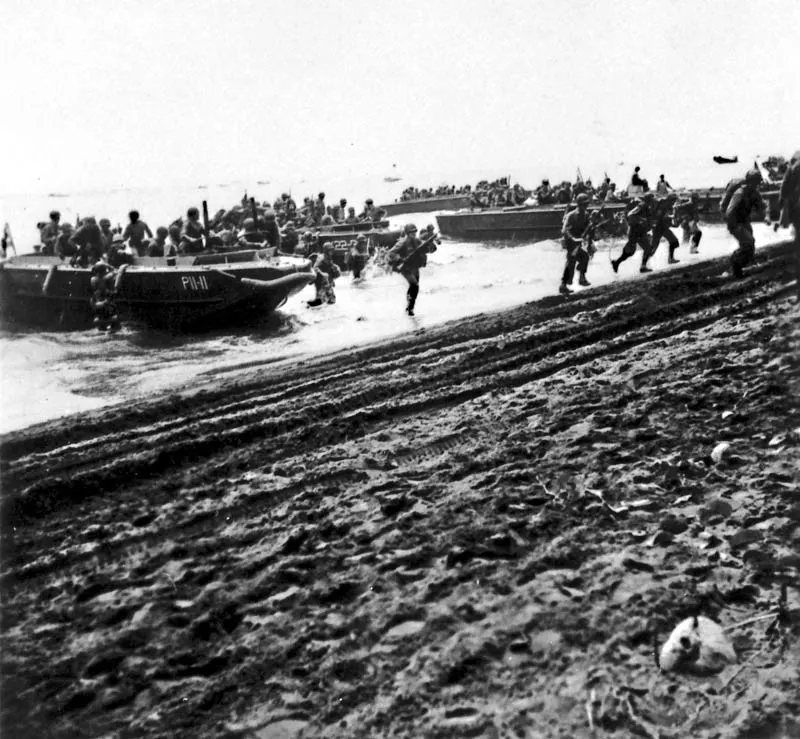
US Marines of the 1st Division come ashore on Guadalcanal from their landing craft on 7 August 1942US Marines of the 1st Division come ashore on Guadalcanal from their landing craft on 7 August 1942Image: U.S. Marine Corps · Public domain
world · Oceania

US Marines land on Guadalcanal in the first Allied offensive in the Pacific

In the months after Pearl Harbor, Japan’s forces swept across South-East Asia and the western Pacific. By mid-1942 they had reached the Solomon Islands, then a British protectorate, and begun building an airfield at Lunga Point on Guadalcanal, from which bombers could threaten the sea routes between the United States and Australia. After the American victory at Midway in June, the Allies decided to strike there first. On the morning of 7 August 1942 a fleet under Rear Admiral Richmond K. Turner put the 1st Marine Division ashore on Guadalcanal and on the smaller islands of Tulagi, Gavutu and Tanambogo across the channel. The landing on Guadalcanal took the Japanese by surprise and met little resistance, and the unfinished airfield, soon named Henderson Field, was taken the next day; on the smaller islands the fighting was fierce. It was the first American land offensive of the war, and it led to six months of battles on land, at sea and in the air before Japan withdrew its last troops in February 1943.

Source: Naval History and Heritage Command: Guadalcanal and Tulagi Landings ↗
1944
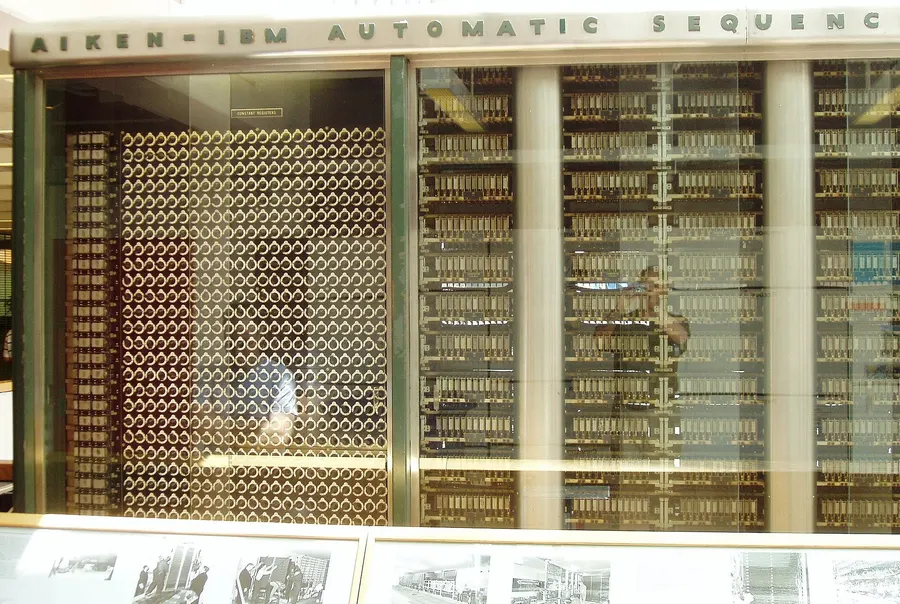
Part of the Harvard Mark I, the IBM Automatic Sequence Controlled Calculator, on display at Harvard UniversityPart of the Harvard Mark I, the IBM Automatic Sequence Controlled Calculator, on display at Harvard UniversityImage: Daderot · CC BY-SA 3.0
science · Americas

IBM hands the Harvard Mark I calculator to Harvard

In 1937 Howard Aiken, a Harvard graduate student tired of grinding through long calculations by hand, proposed a machine that could carry out a whole sequence of arithmetic operations by itself. IBM agreed to build it, and its engineers spent several years assembling it at Endicott, New York, from thousands of the switches, relays and counting wheels used in the company’s punched-card machines. It was shipped to Cambridge, Massachusetts, early in 1944. On 7 August 1944 IBM’s president, Thomas J. Watson, formally presented the Automatic Sequence Controlled Calculator to Harvard at a ceremony in University Hall. Known at Harvard as the Mark I, it was about 51 feet long, 8 feet high and weighed some 5 tons, and it read its instructions from a punched paper tape. It was among the first machines able to run long computations automatically. The US Navy used it through the rest of the war, and Grace Hopper, one of its first programmers, went on to become a pioneer of programming languages.

Source: Harvard University, Collection of Historical Scientific Instruments: Harvard IBM Mark I ↗
1947
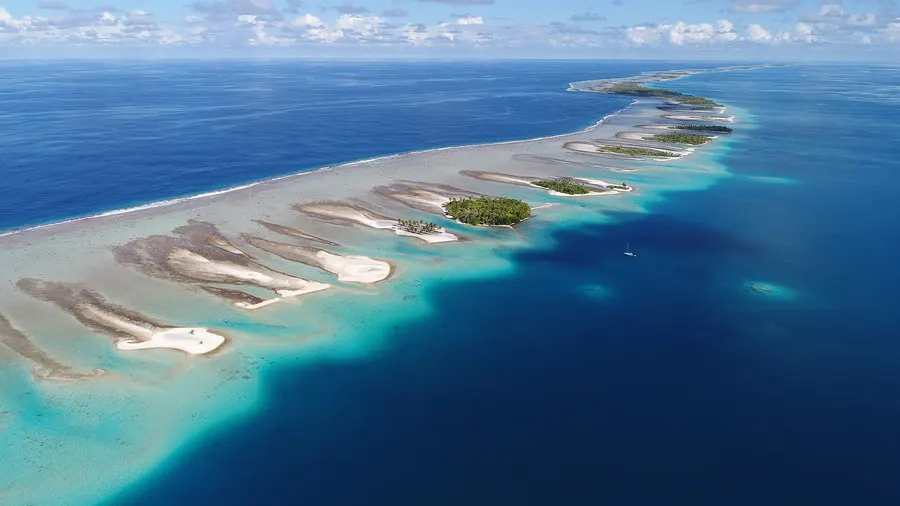
The atoll of Raroia in French Polynesia seen from the air, the island where the Kon-Tiki came ashoreThe atoll of Raroia in French Polynesia seen from the air, the island where the Kon-Tiki came ashoreImage: AFundManager · CC BY-SA 4.0
world · Oceania

The Kon-Tiki raft runs onto the reef at Raroia after 101 days

The Norwegian Thor Heyerdahl believed that people from South America could have settled Polynesia, and to show that it was possible he and five companions set out from Peru in April 1947 on a raft of balsa logs. On 7 August 1947, after 101 days and some 7,000 kilometres, the Kon-Tiki was driven onto the reef of Raroia in the Tuamotu islands. All six men waded ashore safely. Most scholars still think Polynesia was settled from Asia, but the voyage made Heyerdahl world famous.

Source: Kon-Tiki Museum: The Kon-Tiki expedition ↗
1959
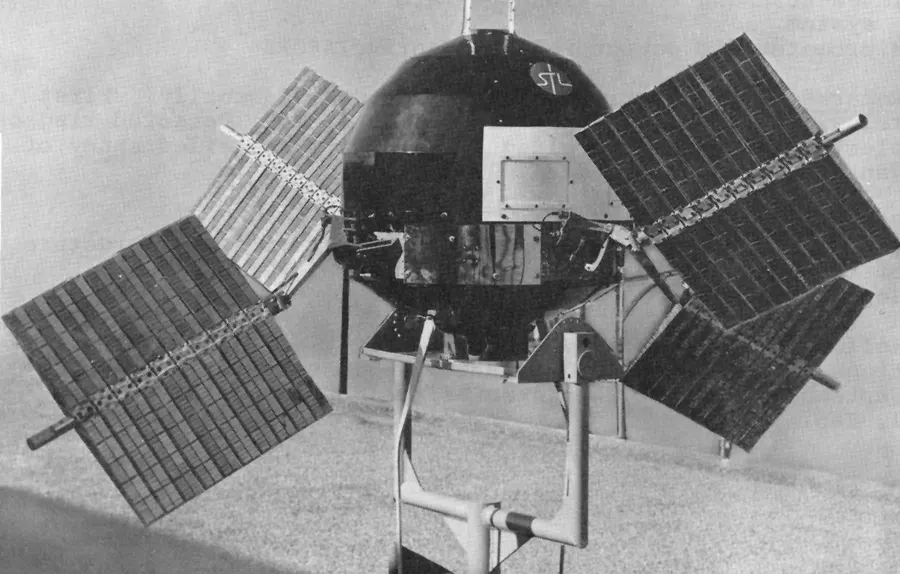
Explorer 6 with its four paddle-shaped solar panels opened outExplorer 6 with its four paddle-shaped solar panels opened outImage: Unknown author · Public domain
science · Global

Explorer 6 is launched and soon sends back the first picture of Earth from a satellite

Explorer 6 was a small American satellite with four solar panels spread like paddles, launched from Cape Canaveral on 7 August 1959 into a long, looping orbit to study radiation around the Earth. A week later, on 14 August, its simple scanning camera took the first picture of Earth ever made from a satellite: a crude, grainy image of sunlit clouds over the Pacific Ocean, sent back to a ground station in Hawaii. It hinted at what weather satellites would soon make routine.

Source: NASA Space Science Data Coordinated Archive: Explorer 6 ↗
1960
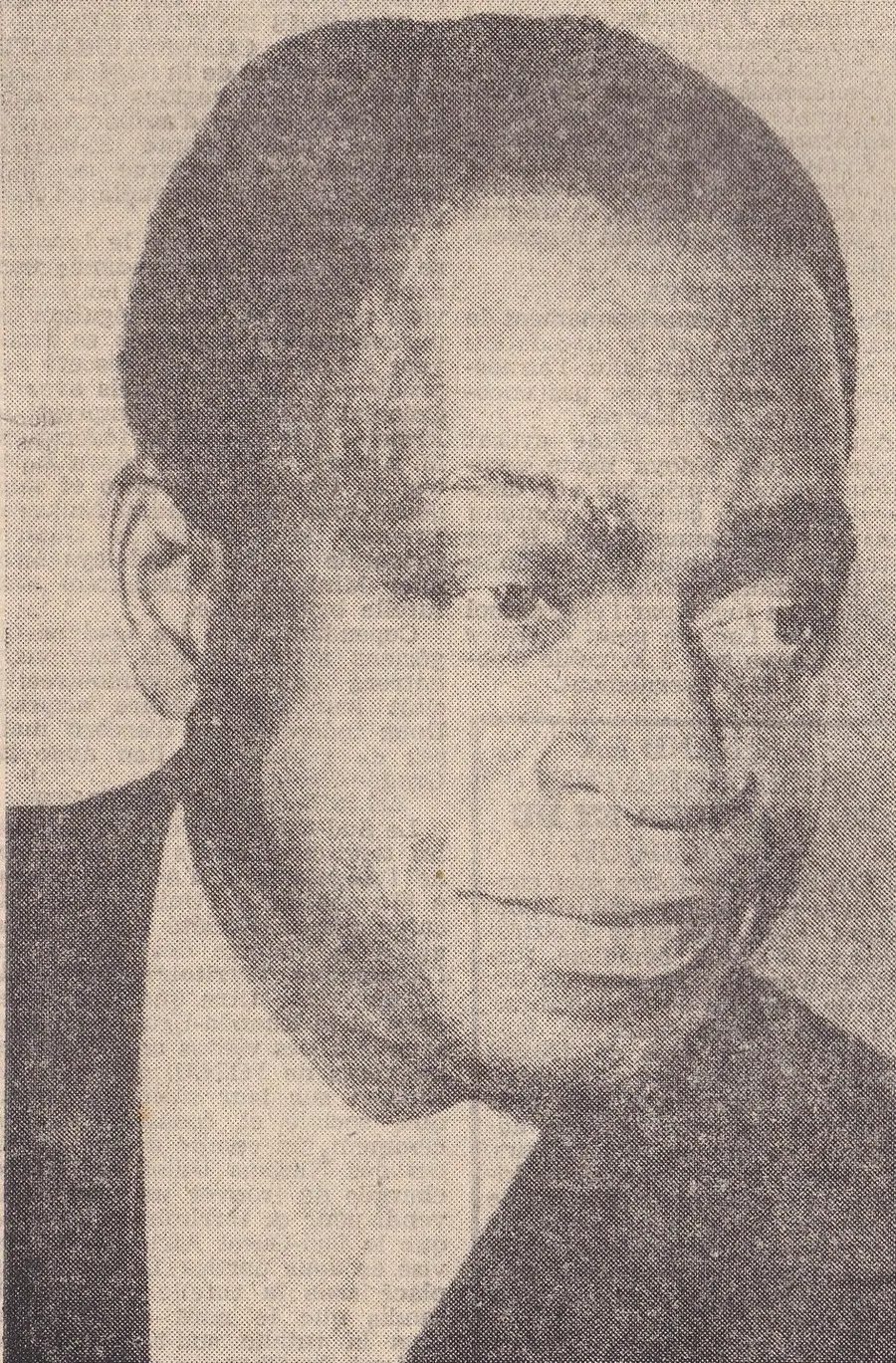
Félix Houphouët-Boigny, who led Côte d'Ivoire to independence and became its first president, photographed in 1958Félix Houphouët-Boigny, who led Côte d’Ivoire to independence and became its first president, photographed in 1958Image: Unknown photographer (Présence Congolaise) · Public domain
politics · Africa

Côte d’Ivoire becomes independent from France

France made the Ivory Coast a colony in 1893 and later ruled it as part of French West Africa, where Africans were long subject to forced labour on plantations and public works. After the Second World War a wealthy African planter and doctor, Félix Houphouët-Boigny, organised the colony’s African farmers, founded the Democratic Party of Côte d’Ivoire and was elected to the French National Assembly in Paris, where he pressed for the end of forced labour, which France abolished across its African colonies in 1946. In the referendum of 1958 the colony voted to join the new French Community, and in December it became an autonomous republic with Houphouët-Boigny as prime minister from 1959. As one French African territory after another moved to full independence in 1960, Côte d’Ivoire followed on 7 August 1960. Houphouët-Boigny was elected president later that year and ruled until his death in 1993, keeping close ties with France while cocoa and coffee exports made the country one of the most prosperous in West Africa.

Source: Britannica: History of Côte d’Ivoire ↗
1974
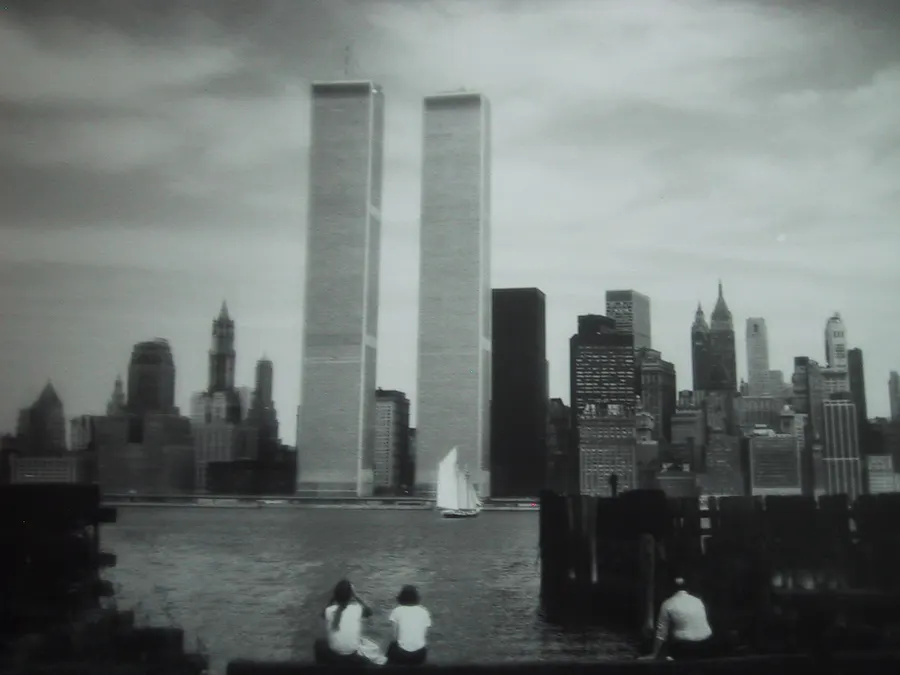
The Twin Towers of the World Trade Center rising above Lower Manhattan in the 1970s, photographed by Edgar de EviaThe Twin Towers of the World Trade Center rising above Lower Manhattan in the 1970s, photographed by Edgar de EviaImage: Edgar de Evia · CC BY-SA 2.5
culture · Americas

Philippe Petit walks a wire between the Twin Towers

Philippe Petit was a French street performer and wire-walker who had already crossed between the towers of Notre-Dame in Paris and the pylons of Sydney Harbour Bridge. He first read about the planned World Trade Center as a teenager, and he spent six years preparing what he called ‘le coup’, studying the towers, visiting them in disguise and training with a team of friends. On the night of 6 August 1974 they slipped into the towers, then nearing completion, and strung a steel cable across the gap between the roofs. Early on the morning of 7 August 1974 the 24-year-old Petit stepped out onto the wire, about 1,350 feet above the street, with no net. For some 45 minutes he walked back and forth, knelt, lay down on the cable and saluted the crowds gathering below, while police waited on the roofs. He was arrested when he came in, but the charges were dropped in return for a free show for children in Central Park. The walk became the subject of the Oscar-winning documentary Man on Wire.

Source: National September 11 Memorial & Museum: Philippe Petit’s High-Wire Walk Between the Towers ↗
1976
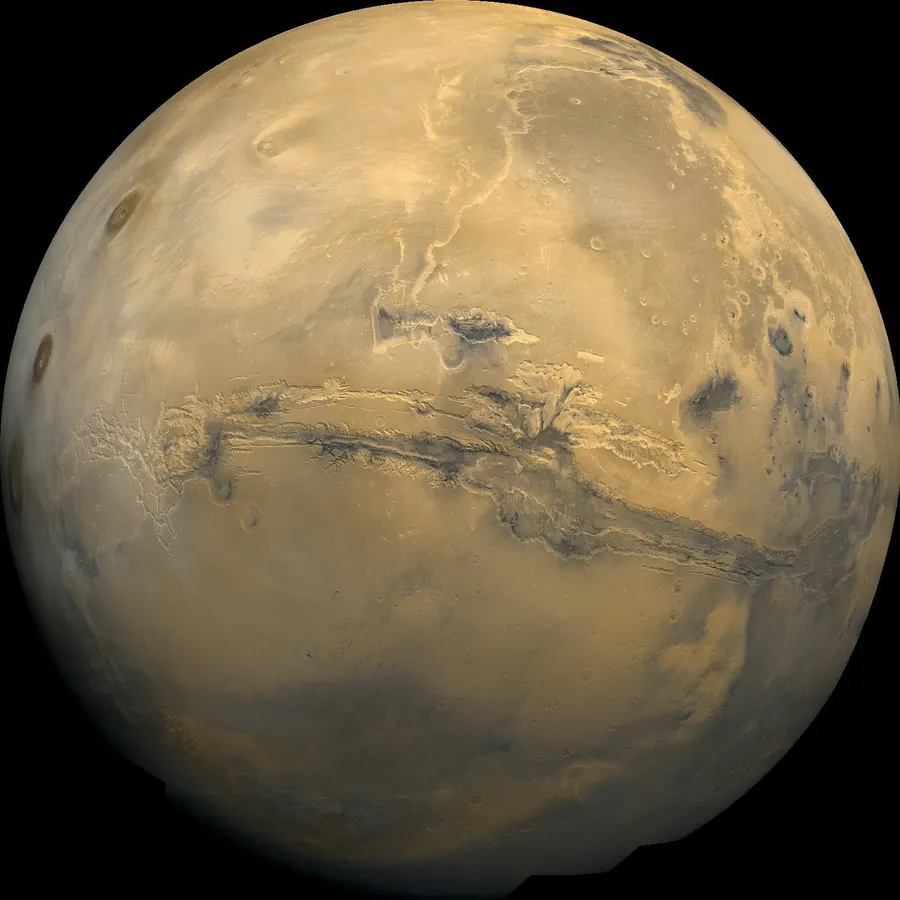
The great canyon system of Valles Marineris on Mars, in a mosaic of images taken by the Viking orbitersThe great canyon system of Valles Marineris on Mars, in a mosaic of images taken by the Viking orbitersImage: NASA / USGS (see PIA04304 catalog page) · Public domain
science · Global

Viking 2 goes into orbit around Mars

NASA sent two identical Viking spacecraft to Mars in 1975, each an orbiter carrying a lander. Viking 2 went into orbit around the planet on 7 August 1976, almost 11 months after launch, and its orbiter photographed the surface to help choose a safe place to land. On 3 September its lander touched down on the plain of Utopia Planitia, far from Viking 1. Between them the two orbiters sent back more than 52,000 images and mapped about 97 per cent of Mars.

Source: NASA Science: Viking 2 ↗
1987
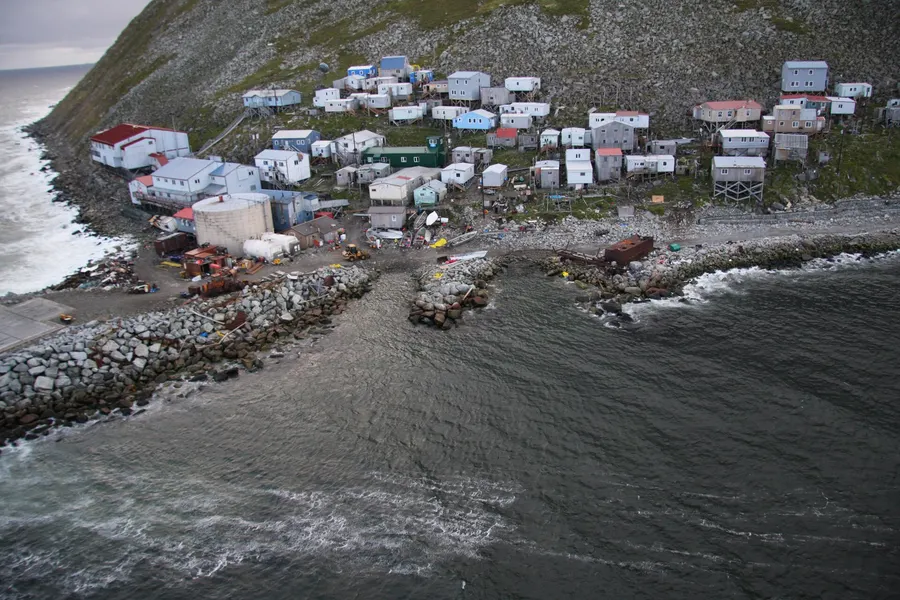
The village on Little Diomede Island in the Bering Strait, where Lynne Cox began her swimThe village on Little Diomede Island in the Bering Strait, where Lynne Cox began her swimImage: United States Coast Guard, Petty Officer Richard Brahm · Public domain
sport · Americas

Lynne Cox swims across the Bering Strait from the US to the Soviet Union

Little Diomede, in Alaska, and Big Diomede, in the Soviet Union, lie less than 3 miles apart in the Bering Strait, divided by the Cold War border. On 7 August 1987 the American long-distance swimmer Lynne Cox swam from one to the other in water of about 3 to 6°C, taking a little over two hours, after Soviet permission arrived only a day before. Soviet officials welcomed her on the far shore, and later that year Mikhail Gorbachev and Ronald Reagan both praised the swim.

Source: National Park Service: Lynne Cox, the swim that lifted the Iron Curtain ↗
1998
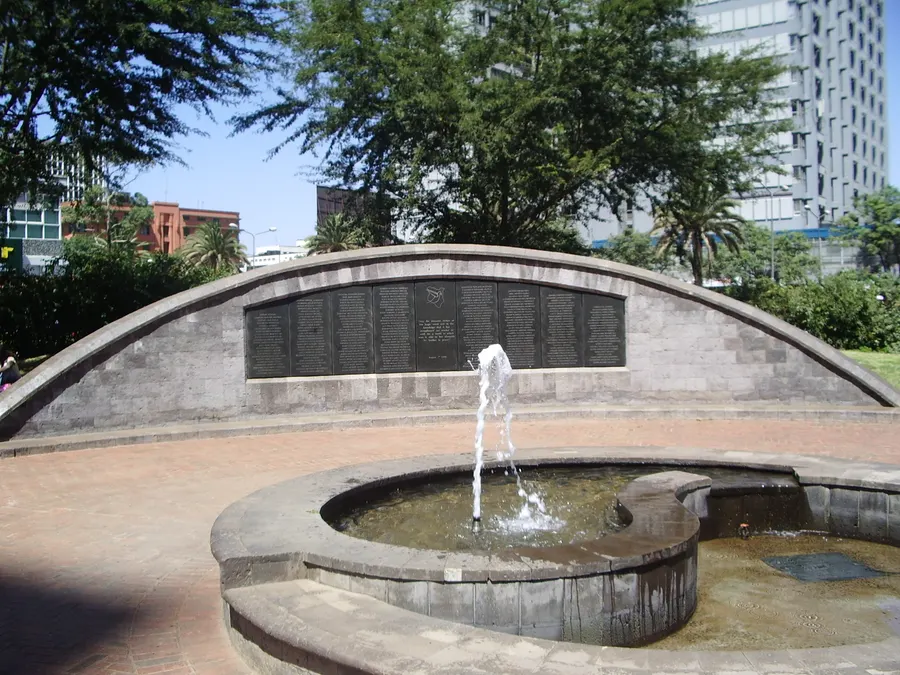
The memorial to the victims of the 1998 bombing at the site of the former US embassy in NairobiThe memorial to the victims of the 1998 bombing at the site of the former US embassy in NairobiImage: Zweifel · CC BY-SA 3.0
world · Africa

Bombs destroy US embassies in Nairobi and Dar es Salaam

On the morning of 7 August 1998 suicide bombers detonated trucks packed with explosives outside the American embassies in Nairobi, Kenya, and Dar es Salaam, Tanzania, within minutes of each other. The blasts killed 224 people, most of them Kenyans and including 12 Americans, and wounded more than 4,500. The attacks were quickly linked to al-Qaeda, and Osama bin Laden was indicted in the United States that November. A memorial park now stands on the site of the Nairobi embassy.

Source: Federal Bureau of Investigation: East African Embassy Bombings ↗
VI
2000 TO TODAY

Modern Day

The events of recent decades that have already become part of the historical record.

2014
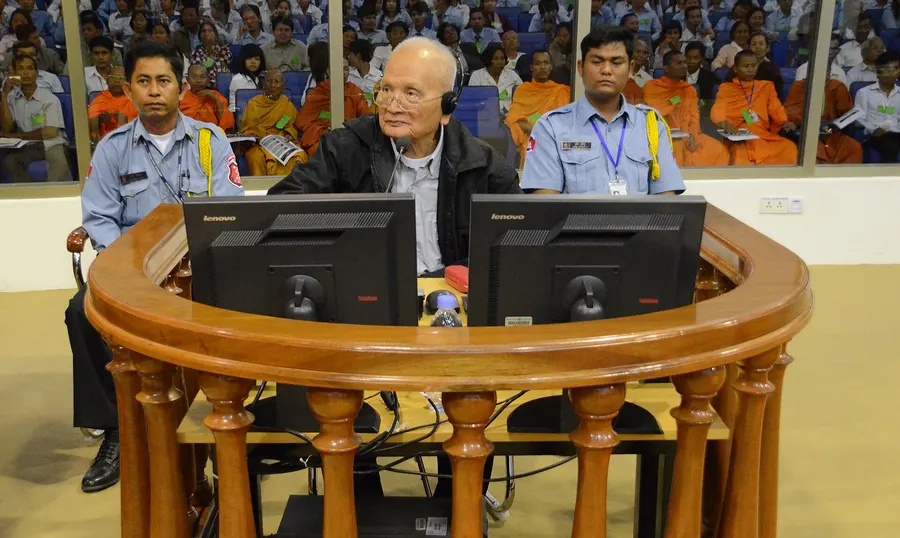
Nuon Chea, the Khmer Rouge's 'Brother Number Two', in the courtroom of the Extraordinary Chambers in Phnom Penh during his trial in 2011Nuon Chea, the Khmer Rouge’s ‘Brother Number Two’, in the courtroom of the Extraordinary Chambers in Phnom Penh during his trial in 2011Image: Extraordinary Chambers in the Courts of Cambodia · CC BY-SA 2.0
politics · Asia

Two Khmer Rouge leaders are sentenced to life for crimes against humanity

The Khmer Rouge seized Cambodia in April 1975 and emptied its cities, driving the people into the countryside to work in collective farms. By the time Vietnamese forces drove them from power in January 1979, around 1.7 million people had died of execution, starvation, overwork and disease. Their leader, Pol Pot, died in 1998 without ever facing trial. In 2006 a special court set up by Cambodia and the United Nations, the Extraordinary Chambers in the Courts of Cambodia, with Cambodian and international judges, began its work in Phnom Penh. On 7 August 2014 the court’s Trial Chamber found Nuon Chea, 88, the movement’s chief ideologist, and Khieu Samphan, 83, the former head of state, guilty of crimes against humanity, including murder and extermination, for the forced evacuation of the cities and later forced movements of the population and executions. Both were sentenced to life imprisonment. It was the first verdict against the regime’s top surviving leaders, more than 35 years after its fall. In a second trial in 2018 both were also convicted of genocide.

Source: UN News: UN-backed tribunal sentences Khmer Rouge leaders to life in prison ↗
RESEARCH

Sources & Further Reading

Selected authoritative references supporting the events on this page.

Britannica: Otto I↗Wikipedia: Otto the Great↗Presidential Library of Russia: Battle of Gangut, the first triumph of the Russian fleet↗Britannica: Battle of Gangut↗Britannica: Battle of Boyacá↗Library of Congress, 4 Corners of the World: The Bicentennial of the Battle of Boyacá↗State Library Victoria: Australian football, from rectangles to ovals↗AFL: A game is born↗Naval History and Heritage Command: Guadalcanal and Tulagi Landings↗National Park Service: First Offensive, the Marine Campaign for Guadalcanal↗Harvard University, Collection of Historical Scientific Instruments: Harvard IBM Mark I↗Wikipedia: Harvard Mark I↗Kon-Tiki Museum: The Kon-Tiki expedition↗Britannica: Kon-Tiki↗NASA Space Science Data Coordinated Archive: Explorer 6↗Smithsonian National Air and Space Museum: Explorer 6 satellite (reconstructed replica)↗Britannica: History of Côte d’Ivoire↗US Department of State, Office of the Historian: Côte d’Ivoire↗National September 11 Memorial & Museum: Philippe Petit’s High-Wire Walk Between the Towers↗Wikipedia: Philippe Petit↗NASA Science: Viking 2↗NASA Space Science Data Coordinated Archive: Viking Project Information↗National Park Service: Lynne Cox, the swim that lifted the Iron Curtain↗International Swimming Hall of Fame: How an American swimmer melted the ice of the Cold War↗Federal Bureau of Investigation: East African Embassy Bombings↗US Department of State, National Museum of American Diplomacy: The August 7, 1998, East Africa embassy bombings↗UN News: UN-backed tribunal sentences Khmer Rouge leaders to life in prison↗Extraordinary Chambers in the Courts of Cambodia: Case 002↗
WHY THESE MOMENTS?

Significance before volume

This page is not the longest possible list of events. It is a chronological journey through 7 August, where each entry is chosen for historical significance, human interest and reliability.

Facts are checked against authoritative museums, archives, universities and reference works. Where sources disagree, the page says so.

EXPLORED THE DEEPER STORY?

Return to the highlights of 7 August

Discover the lighter side of the date with famous birthdays, culture, firsts and lives remembered.

Explore This Day →
← PREVIOUS DAY6 August
HISTORY & TIMELINE7 August
NEXT DAY →8 August