
HISTORY & TIMELINE
2 June

A journey through
2 June in history

The story of 2 June runs from Vandal warriors plundering Rome in 455 to Europe’s first spacecraft bound for another planet in 2003. In between come a game of lacrosse that captured a British fort, a march on Parliament that became London’s worst riots, a young Italian’s patent for wireless, a Spanish garrison leaving its church after almost a year, citizenship for Native Americans and a World Cup match remembered as a battle.

I
EARLIEST RECORDS

Ancient & Early History

The earliest worthwhile records and events connected with this date.

455
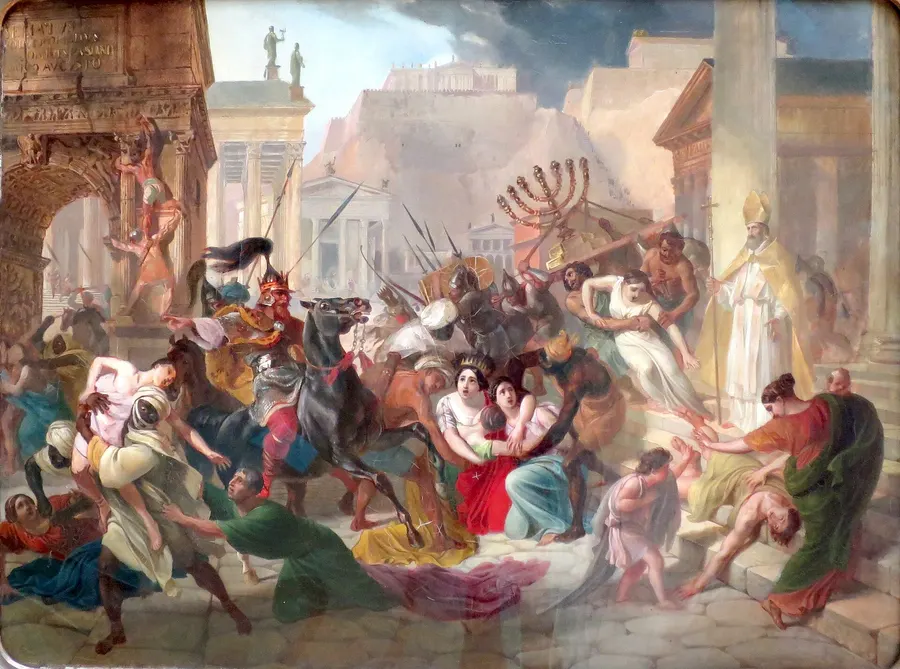
Genseric Sacking Rome, a 19th-century painting by Karl BryullovGenseric Sacking Rome, a 19th-century painting by Karl BryullovImage: Karl Bryullov · Public domain
world · Europe

The Vandals march into Rome and plunder it for two weeks

By the middle of the 5th century the Vandals, a Germanic people who had crossed from Spain into Africa, ruled Carthage and much of the North African coast, and their fleet was feared across the western Mediterranean. Their king, Gaiseric, had a treaty with the Western Roman emperor Valentinian III. When Valentinian was murdered in 455, Gaiseric declared that the agreement had died with him, and sailed for Italy. The Vandals landed at Ostia and marched on Rome, which had no army to defend it. Pope Leo I went out to meet Gaiseric and persuaded him to spare the people from slaughter and the city from fire. From 2 June the Vandals spent a fortnight stripping Rome of its treasures, from palace ornaments to gilded roof tiles, and sailed home with the late emperor’s widow and daughters as hostages. Their name has meant wanton destruction ever since, though the city itself was largely left standing.

Source: Catholic Encyclopedia: Vandals ↗
III
A CHANGING WORLD

Early Modern Era

Exploration, political change, scientific development and expanding global connections.

1763
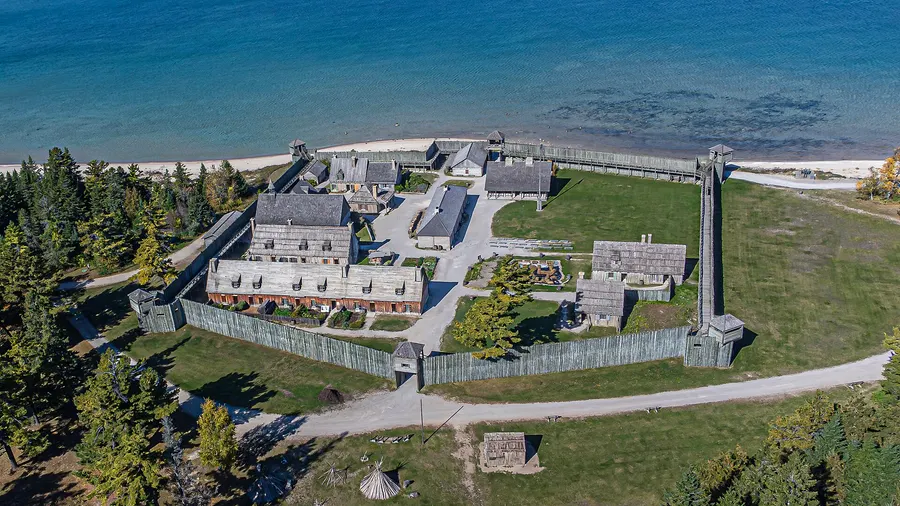
The reconstructed Fort Michilimackinac at Mackinaw City, Michigan, seen from the airThe reconstructed Fort Michilimackinac at Mackinaw City, Michigan, seen from the airImage: WMrapids · CC BY-SA 4.0
world · Americas

A game of lacrosse becomes the cover for capturing a British fort

During the Native American uprising known as Pontiac’s War, Ojibwe warriors staged a game of baggatiway, an early form of lacrosse, outside Fort Michilimackinac, at the tip of Michigan’s lower peninsula, on 2 June 1763, said to be in honour of King George III’s birthday. When the ball was sent over the stockade the players rushed in after it, seized weapons and took the fort. Around 15 soldiers were killed and the commander, Captain George Etherington, was taken prisoner.

Source: Mackinac State Historic Parks: Captain George Etherington, Michilimackinac’s unfortunate commander ↗
1780
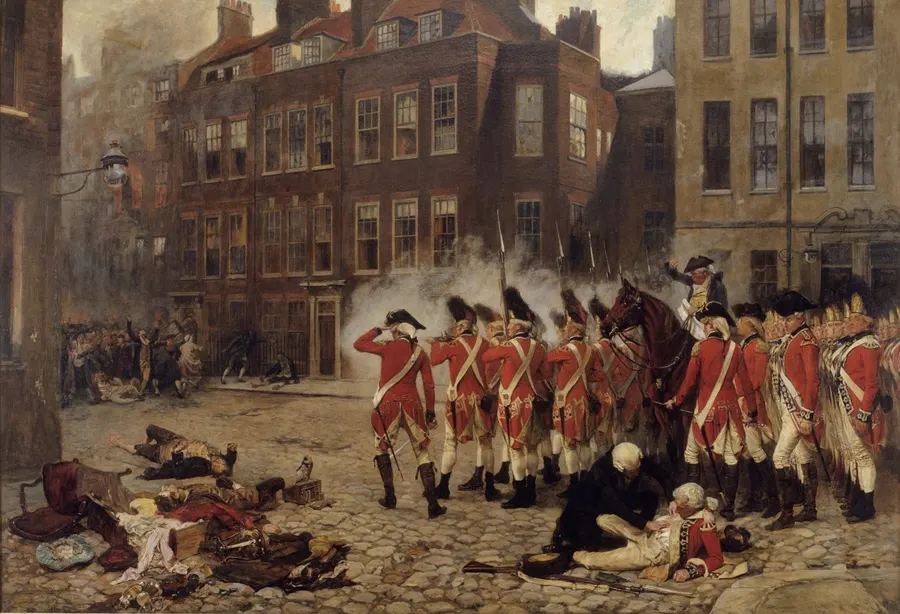
The Gordon Riots, a 19th-century painting by John Seymour Lucas showing soldiers facing the riotersThe Gordon Riots, a 19th-century painting by John Seymour Lucas showing soldiers facing the riotersImage: John Seymour Lucas · Public domain
politics · Europe

A Protestant march on Parliament begins the Gordon Riots

On 2 June 1780 Lord George Gordon led a crowd of tens of thousands from St George’s Fields in Southwark to Westminster, to hand in a petition against a law that had eased some restrictions on Catholics. When Parliament refused to give way, the protest turned into a week of rioting in which Catholic chapels and homes were burned and Newgate Prison was broken open. Troops finally restored order, and several hundred people were killed.

Source: The National Archives: Spotlight on the Gordon Riots ↗
IV
THE NINETEENTH CENTURY

The 1800s

Industry, empire, invention, reform and a century of enormous transformation.

1896
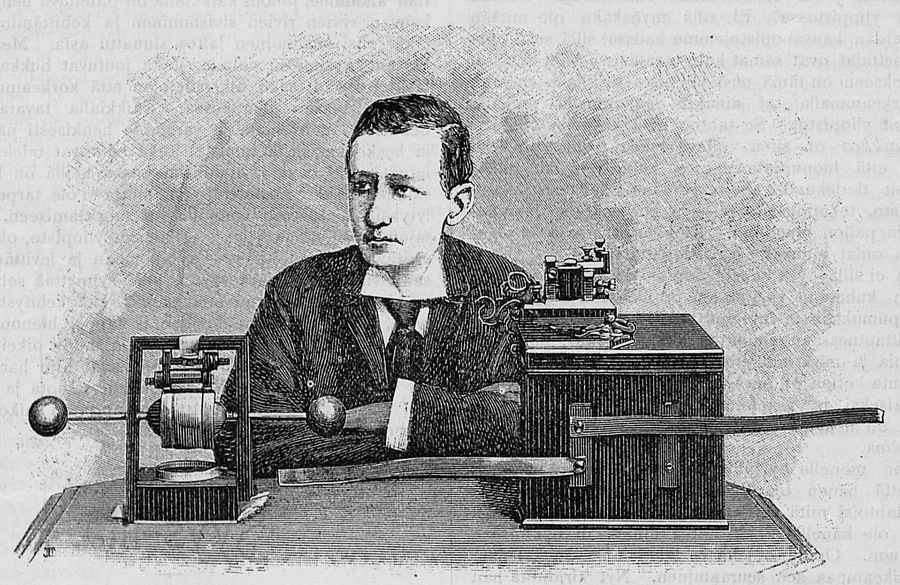
A young Guglielmo Marconi with his early wireless transmitter and receiver, in an engraving of the 1890sA young Guglielmo Marconi with his early wireless transmitter and receiver, in an engraving of the 1890sImage: Unknown author · Public domain
world · Europe

Marconi applies for a patent for wireless telegraphy

Guglielmo Marconi was just 22 when he brought his wireless apparatus from Italy to London, where he hoped to find more interest and money. On 2 June 1896 he filed his application for a British patent for sending signals by electric waves without wires, the first patent for radio telegraphy. Demonstrations for the Post Office followed that summer, and within a few years his signals were crossing the Bristol Channel and then the Atlantic.

Source: Bodleian Archives and Manuscripts: Certificate of renewal of Marconi patent 12039/1896 ↗
1899
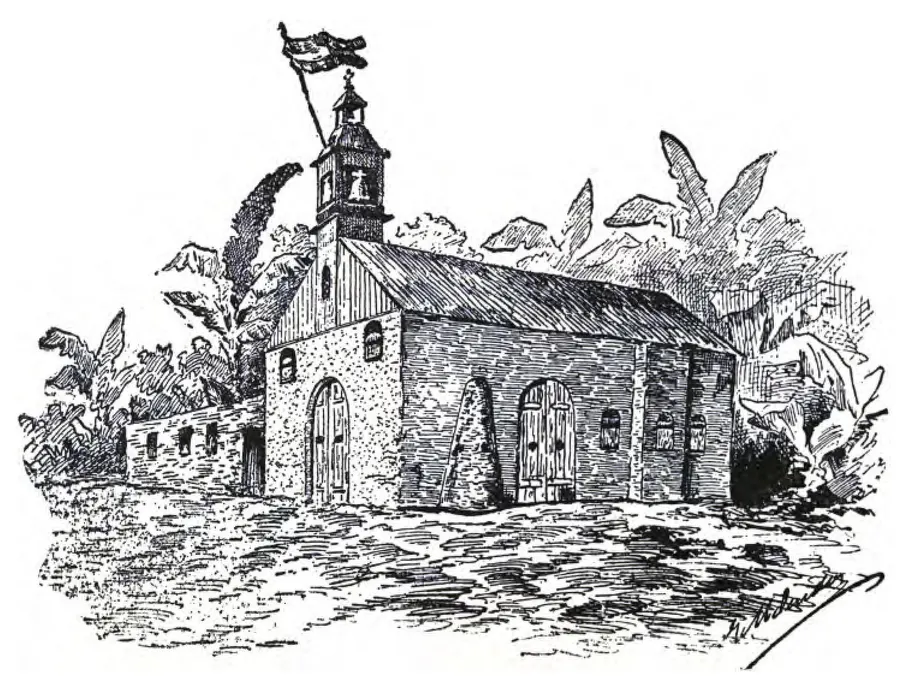
The church of Baler, drawn for Martín Cerezo's own account of the siegeThe church of Baler, drawn for Martín Cerezo’s own account of the siegeImage: Frank Loring Dodds, after Saturnino Martín Cerezo · Public domain
world · Asia

The last Spanish soldiers in the Philippines surrender at Baler

In June 1898 a small Spanish garrison in the town of Baler, on the east coast of Luzon, took refuge in the stone parish church as Filipino revolutionaries closed in. Cut off from the outside world, they refused to believe that Spain had lost the war and handed the islands to the United States. After eleven months, with food running out and men dying of disease, Lieutenant Saturnino Martín Cerezo agreed terms on 2 June 1899. The Filipino leader Emilio Aguinaldo let the survivors go home as friends rather than prisoners.

Source: National Historical Commission of the Philippines: Siege of Baler ↗
V
THE TWENTIETH CENTURY

The 1900s

War and peace, technological leaps, social change, politics, sport and popular culture.

1924
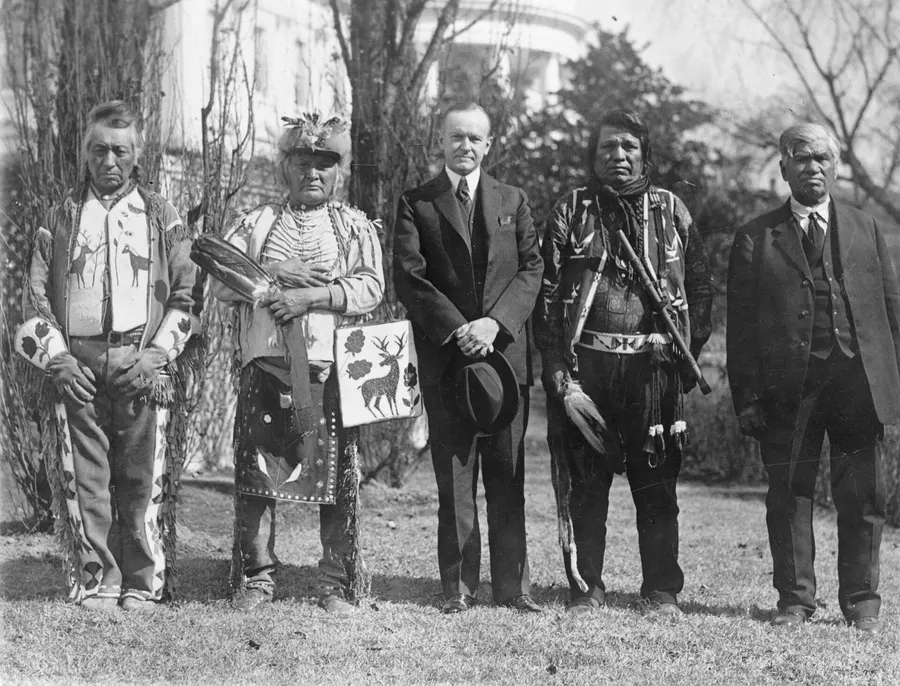
President Calvin Coolidge with four Osage men outside the White House in 1924, the year of the Indian Citizenship ActPresident Calvin Coolidge with four Osage men outside the White House in 1924, the year of the Indian Citizenship ActImage: National Photo Company Collection · Public domain
politics · Americas

The United States grants citizenship to Native Americans

Although they were the first people of the land, Native Americans were long treated as members of separate nations rather than citizens of the United States. Some gained citizenship through treaties, by taking up allotted land or by marrying citizens, and thousands served in the American forces in the First World War, but many others remained outside the nation that governed them. On 2 June 1924 President Calvin Coolidge signed the Indian Citizenship Act, which declared every Native American born within the country’s borders a citizen, without taking away their rights as members of their tribes. Citizenship did not bring the vote everywhere, because voting was left to the states, and some states went on shutting Native Americans out of the ballot box for decades. Even so, the act was a turning point in their legal standing.

Source: National Archives: Indian Citizenship Act of 1924 ↗
1946
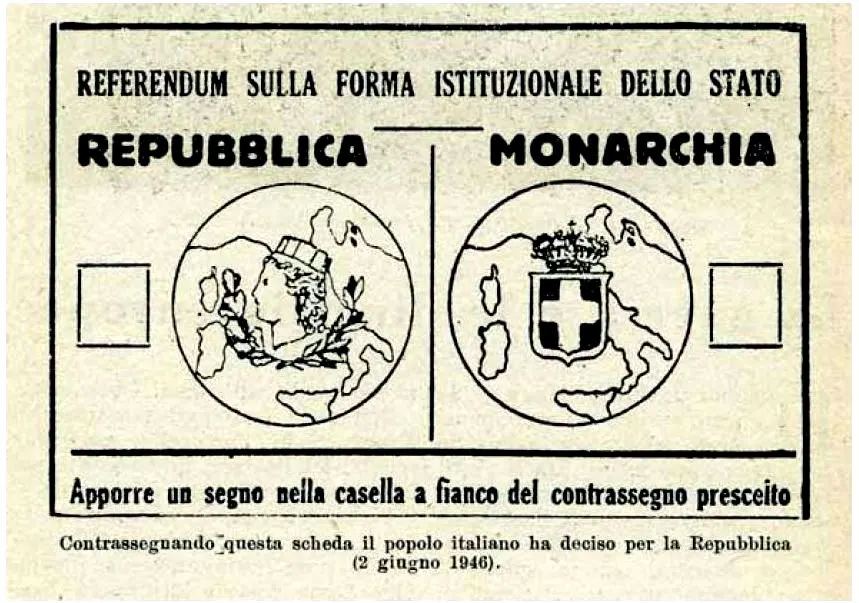
The ballot paper of the 1946 referendum, with the symbols of the republic and the monarchy side by sideThe ballot paper of the 1946 referendum, with the symbols of the republic and the monarchy side by sideImage: Unknown author · Public domain
politics · Europe

Italians vote to turn their kingdom into a republic

Italy came out of the Second World War in ruins, and its royal house was badly tarnished. King Victor Emmanuel III had let Mussolini take power in 1922 and stood by him for two decades. In May 1946 he gave up the throne to his son, Umberto II, hoping to save the monarchy, but the new government had already agreed that the people themselves would decide how Italy should be ruled. On 2 and 3 June 1946 Italians went to the polls to choose between monarchy and republic, and to elect an assembly to write a new constitution. It was the first national vote in which Italian women could take part. The count gave the republic about 12.7 million votes to the monarchy’s 10.7 million. Umberto, king for barely a month, left for exile in Portugal on 13 June. Italy still celebrates 2 June as the Festa della Repubblica.

Source: Presidency of the Italian Republic, historical archive: 2 giugno 1946, Referendum Repubblica ↗
1953
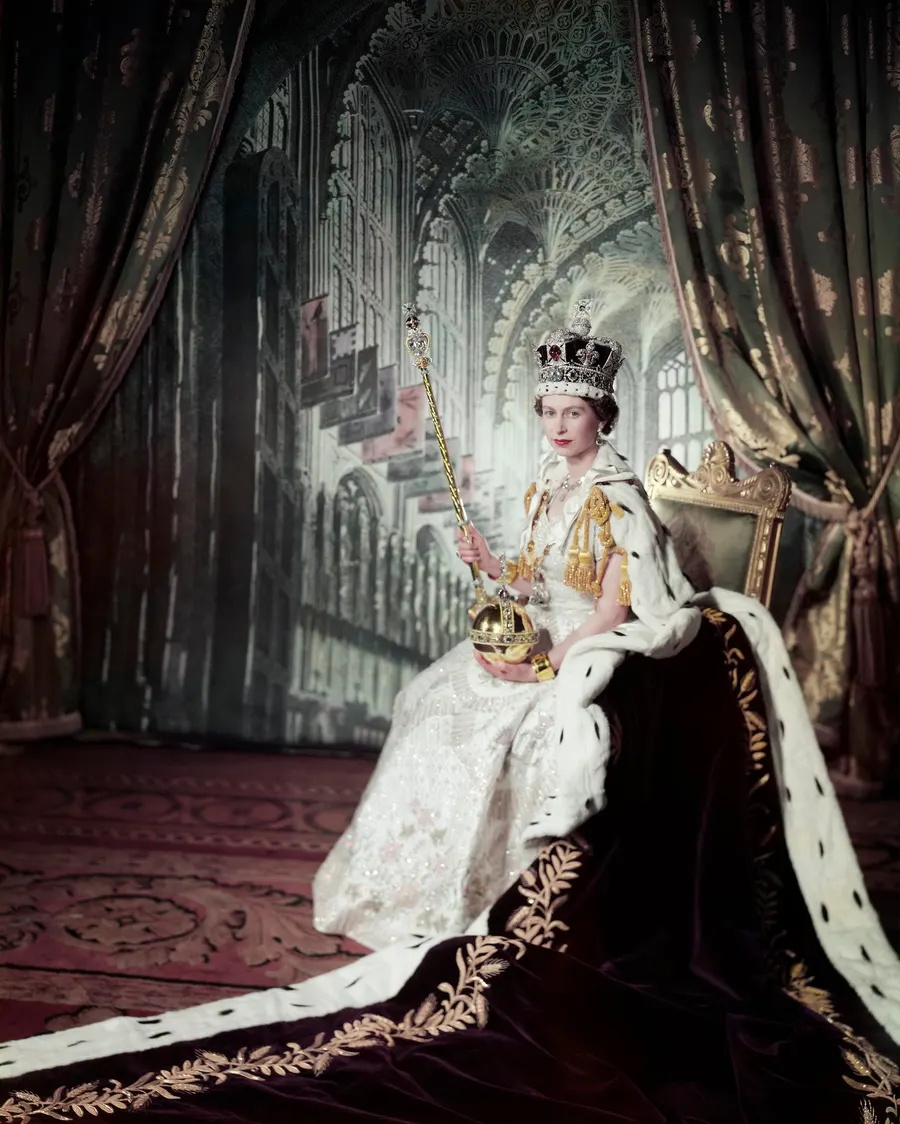
Queen Elizabeth II in her coronation robes, photographed by Cecil Beaton on Coronation DayQueen Elizabeth II in her coronation robes, photographed by Cecil Beaton on Coronation DayImage: Cecil Beaton · Public domain
politics · Europe

Elizabeth II is crowned before the television cameras

Princess Elizabeth became queen in February 1952, when her father, George VI, died in his sleep. By tradition the coronation waited more than a year, both to allow for mourning and to prepare a ceremony that had changed little in a thousand years. At the Queen’s own wish, the service in Westminster Abbey would be shown on television, something never done for a coronation before. On 2 June 1953 the Archbishop of Canterbury, Geoffrey Fisher, crowned the 27-year-old Queen in a service that lasted almost three hours. Some 27 million people in Britain watched on television, many of them crowded around a neighbour’s set, and millions more around the world heard it on the radio or saw films of it later. The number of television licences in Britain had doubled in the run-up to the day, and the broadcast is often called the moment when television came of age.

Source: The Royal Family: 50 facts about Queen Elizabeth II’s Coronation ↗
1962
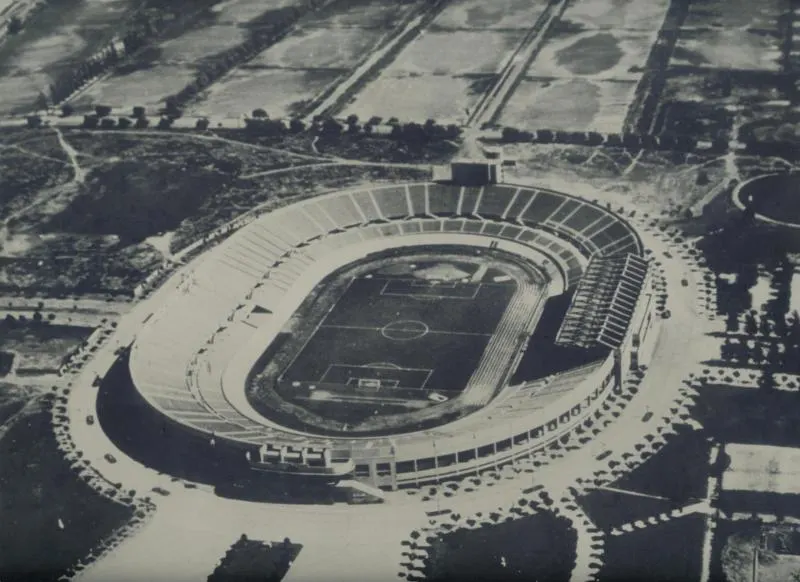
The Estadio Nacional in Santiago, Chile, around the time of the 1962 World CupThe Estadio Nacional in Santiago, Chile, around the time of the 1962 World CupImage: Unknown author · Public domain
sport · Americas

Chile and Italy fight the ‘Battle of Santiago’

The 1962 World Cup in Chile was played in a charged atmosphere. The country had been hit by a devastating earthquake two years earlier, and articles by Italian journalists that were seen as insulting to Chile had caused fury before the tournament began. When the hosts met Italy in a group match at the Estadio Nacional in Santiago on 2 June, the crowd and the players were already on edge. The game turned into a brawl almost at once. Punches and kicks flew, one Italian’s nose was broken, and the English referee, Ken Aston, sent off two Italians, Giorgio Ferrini and Mario David. Police had to come on to the pitch several times. Chile won 2-0. Aston, who had struggled to make himself understood, later hit on the idea of yellow and red cards while waiting at a traffic light, and they were first used at the 1970 World Cup.

Source: FIFA: La batalla de Santiago ↗
1966
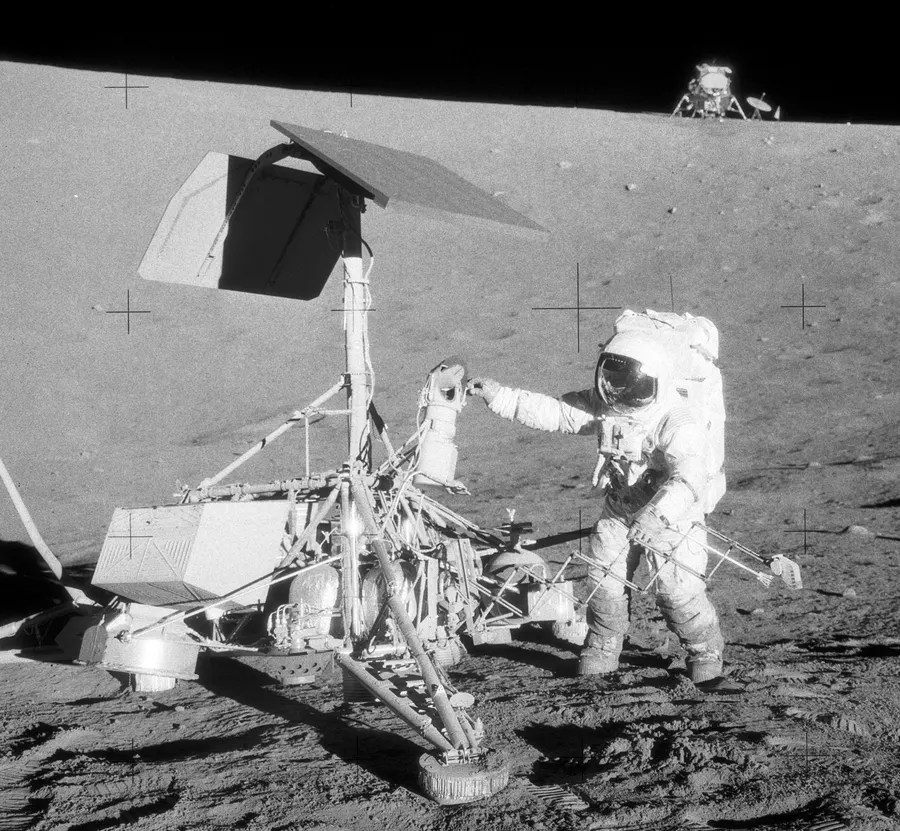
Apollo 12 astronaut Pete Conrad beside Surveyor 3, a sister craft of Surveyor 1, on the Moon in 1969Apollo 12 astronaut Pete Conrad beside Surveyor 3, a sister craft of Surveyor 1, on the Moon in 1969Image: Alan Bean, NASA · Public domain
science · Americas

Surveyor 1 makes America’s first soft landing on the Moon

Before astronauts could land on the Moon, NASA needed to know what they would be stepping on. Some scientists feared the surface might be covered in deep dust that would swallow a spacecraft. The Surveyor programme was designed to find out: a series of robot landers, each on three legs, that would fire rockets to slow themselves down and settle gently on the lunar surface. Surveyor 1 was launched on 30 May 1966 and, after a journey of about 63 hours, touched down in the Ocean of Storms on 2 June, bouncing once before coming to rest only a few miles from its target. It was the first American spacecraft to land softly on another world. Over the following weeks its camera sent back more than 11,000 pictures, showing that the ground was firm enough to hold a lander, a vital lesson for the Apollo missions that followed.

Source: NASA: 55 Years Ago, Surveyor 1 Makes a Soft Landing on the Moon ↗
1973
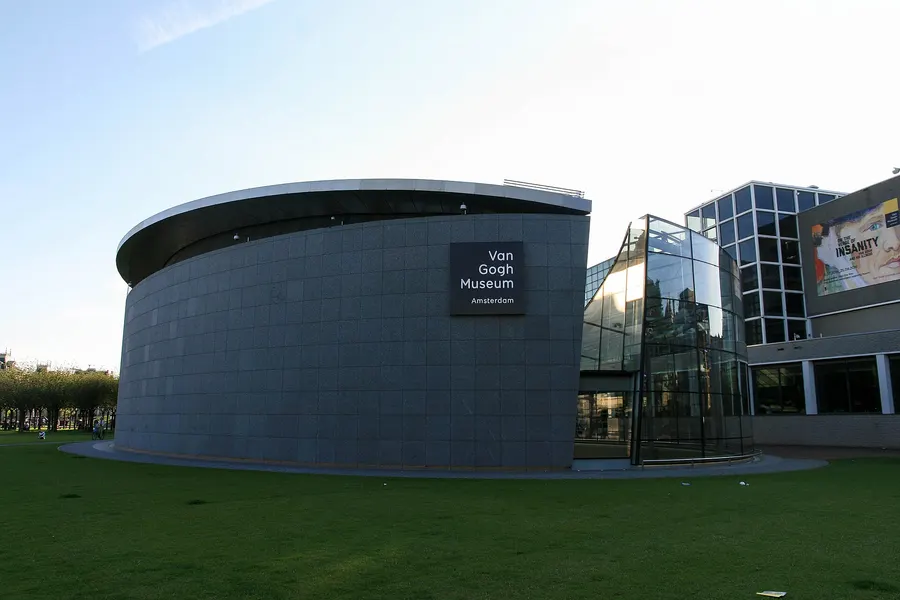
The Van Gogh Museum in Amsterdam at dusk, with the later oval exhibition wing in frontThe Van Gogh Museum in Amsterdam at dusk, with the later oval exhibition wing in frontImage: User:A,Ocram · CC0
culture · Europe

Amsterdam’s Van Gogh Museum opens its doors

When Vincent van Gogh died in 1890 he had sold almost nothing, and hundreds of his paintings and drawings passed to his brother Theo and then to Theo’s widow, Jo van Gogh-Bonger, who worked tirelessly to make his name. Their son, Vincent Willem, later placed the family collection in a foundation, and the Dutch state agreed to build a museum in Amsterdam to house it. The museum, in a building designed by the De Stijl architect Gerrit Rietveld, was opened by Queen Juliana on 2 June 1973. Visitors came in their thousands to see works such as The Potato Eaters and the Sunflowers, and within two months 100,000 people had passed through the doors. It has since become one of the most visited museums in the world, holding the largest collection of Van Gogh’s work anywhere.

Source: Van Gogh Museum: Without family, no museum ↗
1974
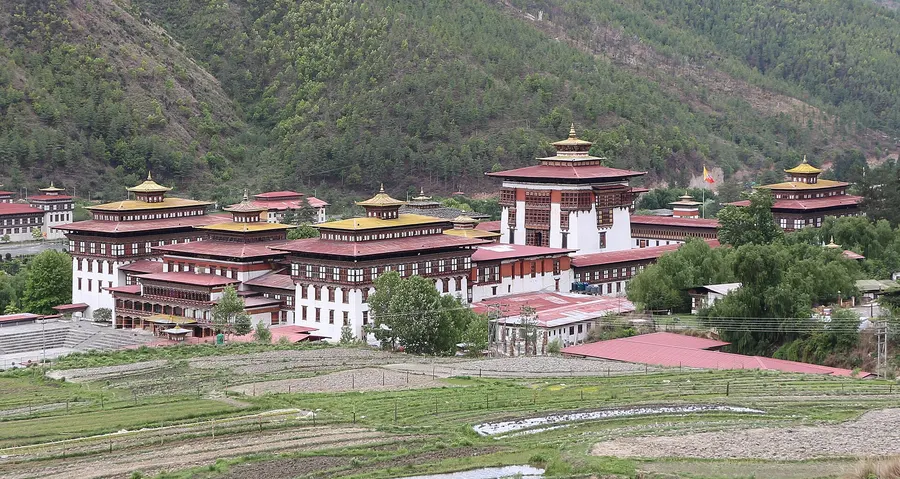
Tashichho Dzong in Thimphu, seat of Bhutan's government, where the coronation of 1974 took placeTashichho Dzong in Thimphu, seat of Bhutan’s government, where the coronation of 1974 took placeImage: Bernard Gagnon · CC BY-SA 4.0
politics · Asia

Bhutan crowns the world’s youngest king

In July 1972 King Jigme Dorji Wangchuck of Bhutan died, and the throne of the small Himalayan kingdom passed to his son, Jigme Singye Wangchuck, who was just 16. The young king had already been given a seat on the country’s planning commission, and he took over a land that was only beginning to build roads, schools and hospitals after centuries of isolation. His formal coronation took place in Thimphu on 2 June 1974, when he received the Raven Crown and became the fourth Druk Gyalpo, or Dragon King. He was then the youngest reigning monarch in the world. In his coronation address he set economic self-reliance as the nation’s goal. He went on to rule for 34 years, became known for the idea that Gross National Happiness matters more than wealth, and stepped down in 2006 to make way for Bhutan’s first parliamentary democracy.

Source: Government of Bhutan, Department of Air Transport: 64th Birth Anniversary of the Fourth Druk Gyalpo ↗
VI
2000 TO TODAY

Modern Day

The events of recent decades that have already become part of the historical record.

2003
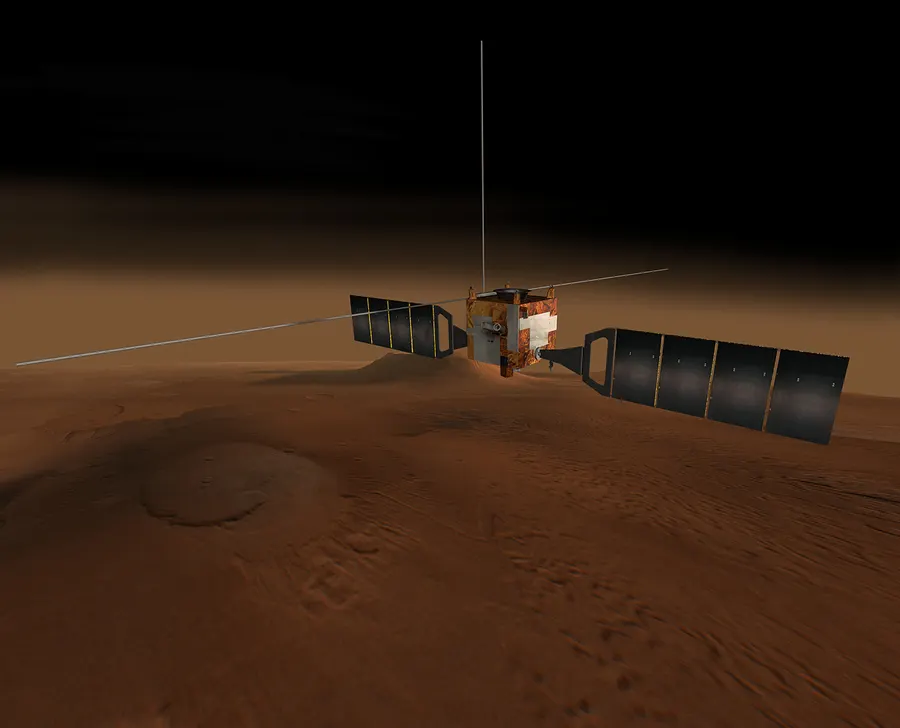
An artist's impression of the Mars Express orbiter above the surface of MarsAn artist’s impression of the Mars Express orbiter above the surface of MarsImage: NASA/JPL/Corby Waste · Public domain
science · Global

Europe launches Mars Express, its first mission to another planet

On 2 June 2003 a Soyuz-Fregat rocket lifted off from Baikonur in Kazakhstan carrying Mars Express, the European Space Agency’s first mission to a planet. The launch was timed to take advantage of Mars passing unusually close to Earth that August. The probe reached Mars orbit on 25 December. Its small British lander, Beagle 2, was lost on the way down, but the orbiter went on mapping the planet and its moons for many years.

Source: European Space Agency: Mars Express overview ↗
RESEARCH

Sources & Further Reading

Selected authoritative references supporting the events on this page.

WHY THESE MOMENTS?

Significance before volume

This page is not the longest possible list of events. It is a chronological journey through 2 June, where each entry is chosen for historical significance, human interest and reliability.

Facts are checked against authoritative museums, archives, universities and reference works. Where sources disagree, the page says so.

EXPLORED THE DEEPER STORY?

Return to the highlights of 2 June

Discover the lighter side of the date with famous birthdays, culture, firsts and lives remembered.

Explore This Day →
← PREVIOUS DAY1 June
HISTORY & TIMELINE2 June
NEXT DAY →3 June