
HISTORY & TIMELINE
12 August

A journey through
12 August in history

The story of 12 August runs from a crusader victory at Ascalon in 1099 to the launch of a probe to touch the Sun in 2018. In between come King David IV’s triumph at Didgori, a Habsburg victory near Mohács, the recapture of Buenos Aires from the British, the death of the last quagga in an Amsterdam zoo, the annexation ceremony in Honolulu, the adoption of the four Geneva Conventions, a peace treaty between Japan and China, the launch of the IBM PC, Carlos Lopes’s Olympic marathon, the opening of a film that set off mass protests, the discovery of the T. rex called Sue and the loss of the submarine Kursk.

II
THE MIDDLE AGES

Medieval History

Kingdoms, conflict, faith, power and the changing medieval world.

1099
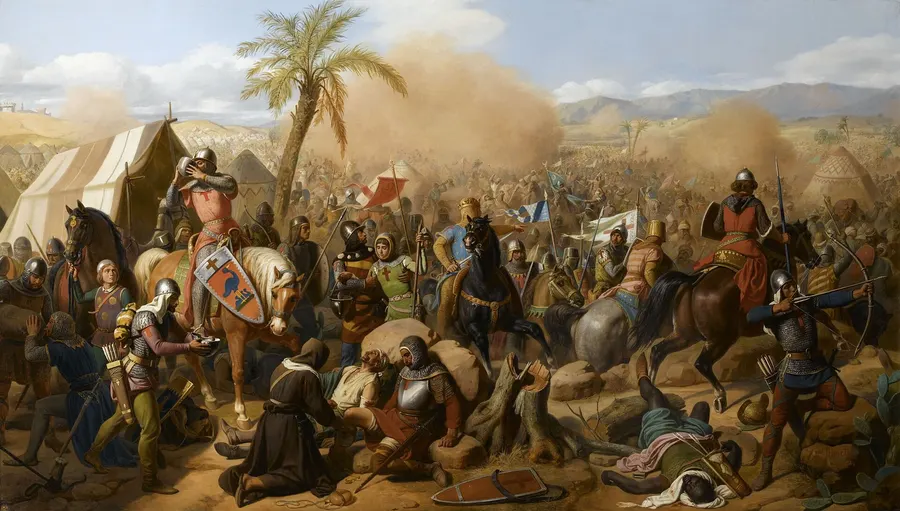
The Battle of Ascalon, painted by Jean-Victor Schnetz in 1847 for the Palace of VersaillesThe Battle of Ascalon, painted by Jean-Victor Schnetz in 1847 for the Palace of VersaillesImage: Jean-Victor Schnetz · Public domain
world · Middle East

The crusaders defeat an Egyptian army at Ascalon

A month after the knights of the First Crusade captured Jerusalem, the vizier al-Afdal brought an army from Fatimid Egypt to the coastal city of Ascalon to win it back. Godfrey of Bouillon, the new ruler of Jerusalem, led the crusaders out to meet it, and on 12 August 1099 they surprised the Egyptian camp at dawn and routed it. The victory secured the new crusader state, though quarrels among its leaders left Ascalon itself in Fatimid hands until 1153.

Source: Britannica: Godfrey of Bouillon ↗
1121
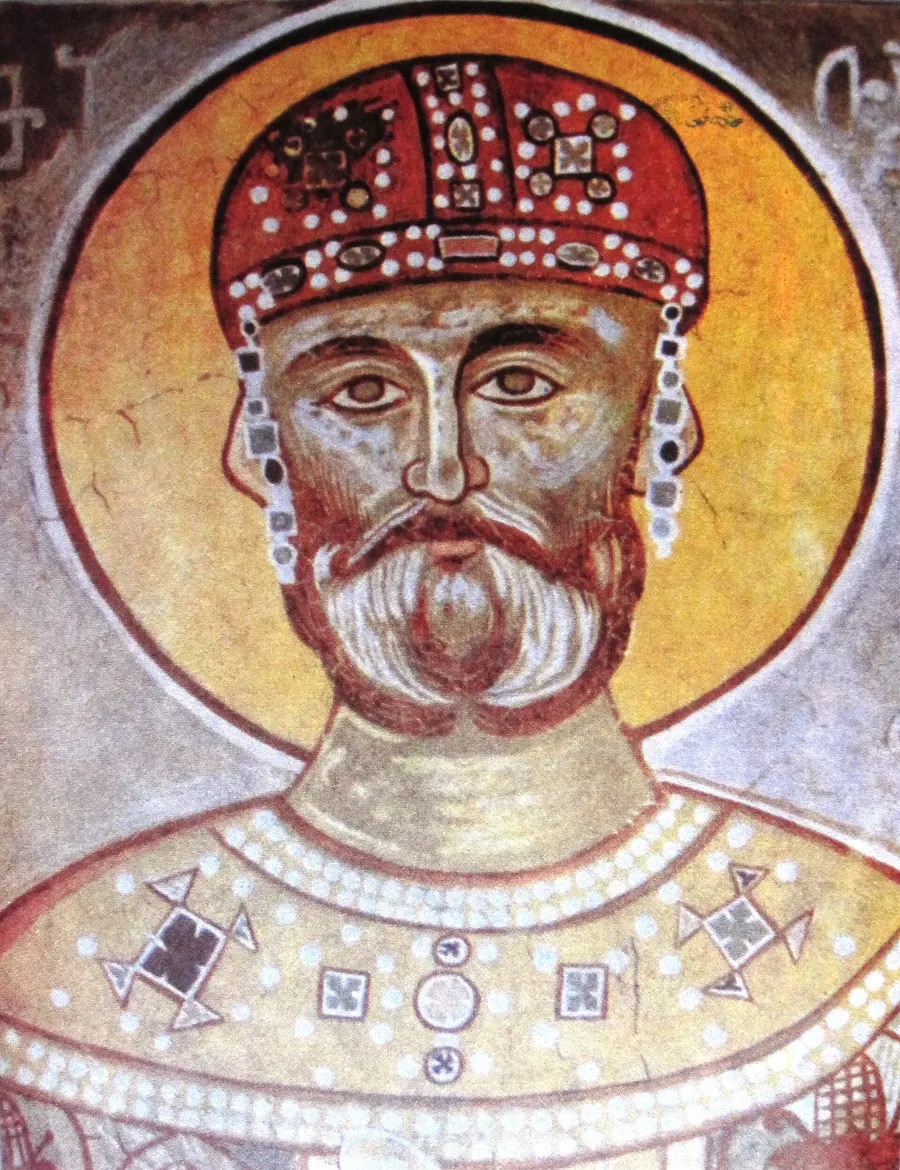
King David IV of Georgia, 'the Builder', in a medieval fresco at the Gelati Monastery, which he foundedKing David IV of Georgia, ‘the Builder’, in a medieval fresco at the Gelati Monastery, which he foundedImage: Unknown artist (medieval fresco, Gelati Monastery) · Public domain
world · Asia

King David IV of Georgia wins the Battle of Didgori

When David IV came to the throne of Georgia in 1089 his kingdom was small, divided and paying tribute to the Seljuk Turks, whose tribes had overrun much of the Caucasus. He curbed the power of the great nobles, reformed the Church and built up a standing army, strengthened by thousands of Kipchak warriors from the northern steppes whom he invited to settle in Georgia with their families. By 1121 his raids had provoked the Muslim rulers of the region into sending a large coalition army under Ilghazi, the Artuqid lord of Mardin. The two armies met at Didgori, in hills west of Tbilisi, on 12 August 1121. Although heavily outnumbered, David’s troops used the narrow ground to break up the larger army and routed it. The next year he took Tbilisi, held by Muslim emirs for centuries, and made it his capital. Didgori opened Georgia’s golden age, which reached its height under his great-granddaughter Queen Tamar, and the victory is still celebrated in Georgia every August.

Source: Ilia State University repository: History of Georgia ↗
III
A CHANGING WORLD

Early Modern Era

Exploration, political change, scientific development and expanding global connections.

1687
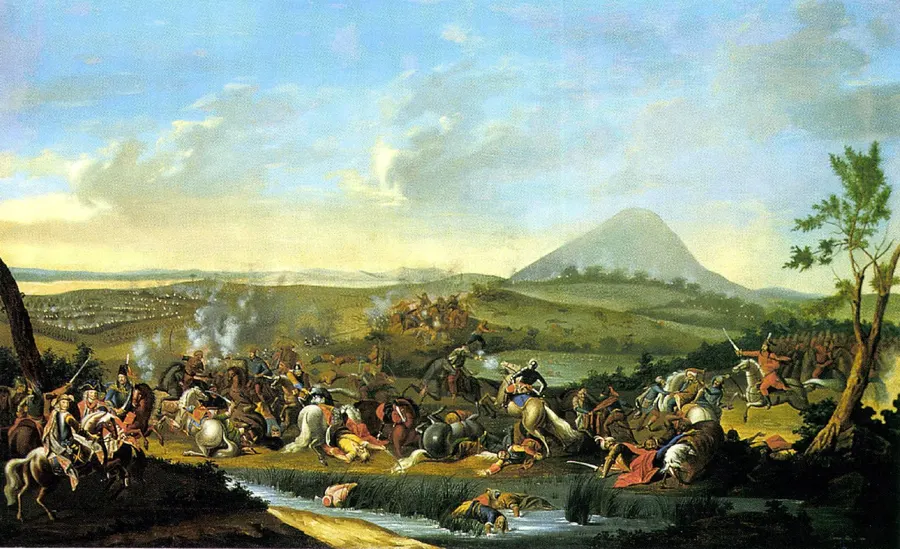
The Battle of Mohács of 1687, painted by the Hungarian artist József Borsos in 1837The Battle of Mohács of 1687, painted by the Hungarian artist József Borsos in 1837Image: József Borsos · Public domain
world · Europe

A Habsburg army defeats the Ottomans near Mohács

Four years after the Ottoman siege of Vienna failed, the armies of the Holy League were pushing the Turks out of Hungary. On 12 August 1687, at Nagyharsány near Mohács, where the Ottomans had crushed the Hungarian kingdom in 1526, an imperial army led by Duke Charles of Lorraine and Maximilian Emanuel of Bavaria routed the grand vizier’s army. The defeat set off a mutiny that toppled Sultan Mehmed IV, and within a few years almost all of Hungary was in Habsburg hands.

Source: Britannica: Charles V Leopold, duke of Lorraine ↗
IV
THE NINETEENTH CENTURY

The 1800s

Industry, empire, invention, reform and a century of enormous transformation.

1806
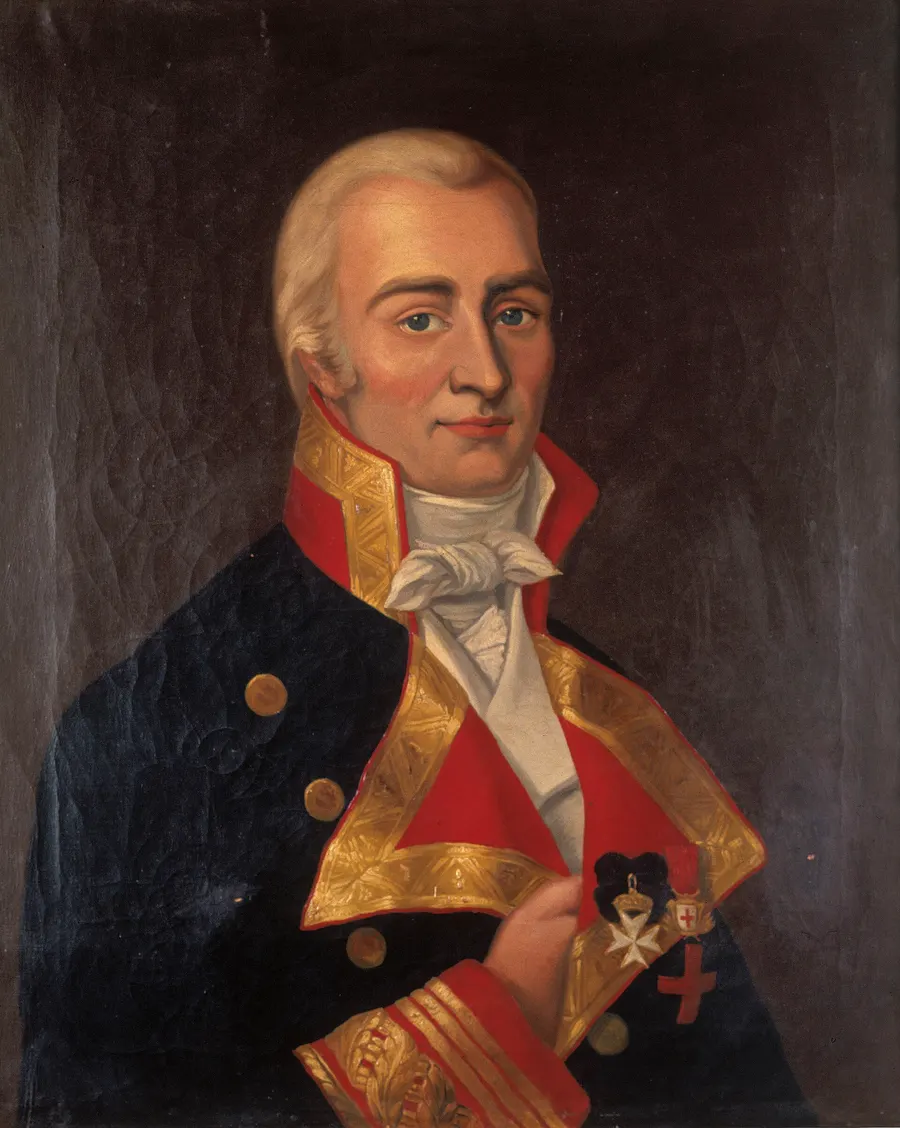
Santiago de Liniers, the French-born officer who led the recapture of Buenos Aires, in a portrait by an unidentified painterSantiago de Liniers, the French-born officer who led the recapture of Buenos Aires, in a portrait by an unidentified painterImage: Unidentified painter · Public domain
world · Americas

Buenos Aires is won back from the British

In June 1806 a small British force under William Carr Beresford, sent from the newly captured Cape Colony without clear orders from London, landed on the Río de la Plata and marched on Buenos Aires, the capital of Spain’s viceroyalty there. The viceroy, the Marquis of Sobremonte, fled inland with the treasury, and the British took the city on 27 June with little resistance and raised their flag over the fort. Santiago de Liniers, a French-born naval officer in Spanish service, gathered troops across the river in Montevideo, landed at Las Conchas on 4 August and marched on the city. On 12 August 1806 his men, joined by local volunteers, fought their way through the streets to the main square, and after some hours of fighting Beresford surrendered. The city’s people, Creoles, Spaniards and Afro-Argentines alike, had driven out a European army with little help from Spain, and when the British returned in 1807 they were beaten again. That new confidence helped lead to the May Revolution of 1810 and independence.

Source: Argentina.gob.ar: 12 de agosto de 1806, la Reconquista de Buenos Aires ↗
1883
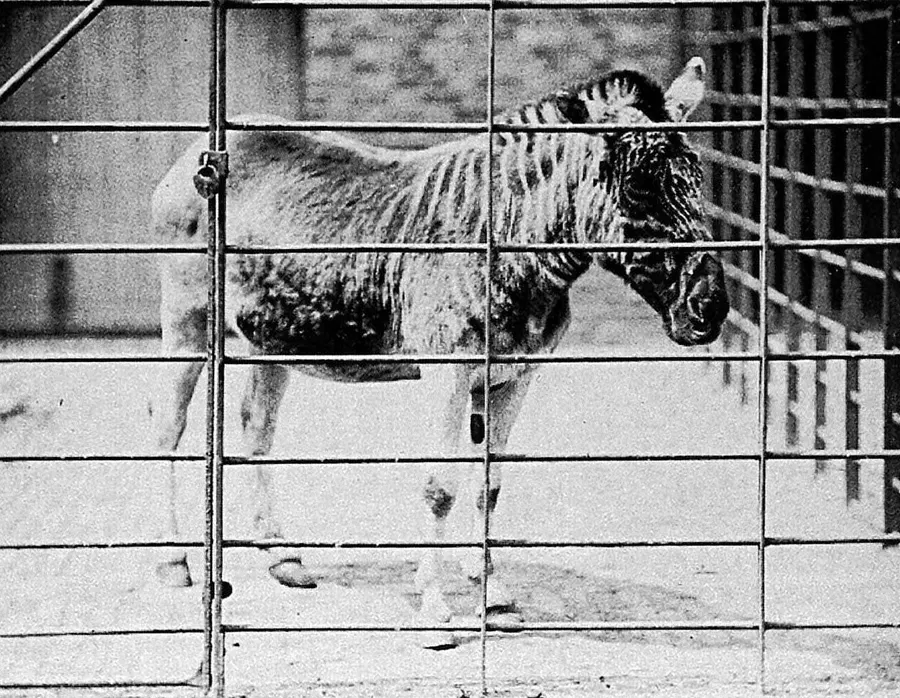
The quagga mare at London Zoo, photographed by Frank Haes in the 1860s; she is the only quagga ever photographed alive, a few years before the last one died in AmsterdamThe quagga mare at London Zoo, photographed by Frank Haes in the 1860s; she is the only quagga ever photographed alive, a few years before the last one died in AmsterdamImage: Frank Haes (d. 1916) · Public domain
science · Africa

The last quagga dies at Amsterdam Zoo

The quagga was a zebra of the dry plains of southern Africa, striped on its head and neck but plain brown behind, and its name is thought to come from the Khoekhoe imitation of its barking call. As European settlers spread across the Karoo and the lands beyond the Orange River in the 19th century, quaggas were shot in great numbers for meat and for their hides and to clear the grazing for sheep and cattle. By the late 1870s none was left in the wild. A few lived on in European zoos. The last of them, a mare that had arrived at Artis, the Amsterdam zoo, in 1867, died there on 12 August 1883, and no one realised at the time that she was the last of her kind. In 1984 the quagga became the first extinct animal to have its DNA studied, from a museum skin; the results showed it was a form of the plains zebra, and a project in South Africa has since been breeding zebras to bring back its look.

Source: Animal Studies Journal (University of Wollongong): Stripes faded, barking silenced, remembering quagga ↗
1898
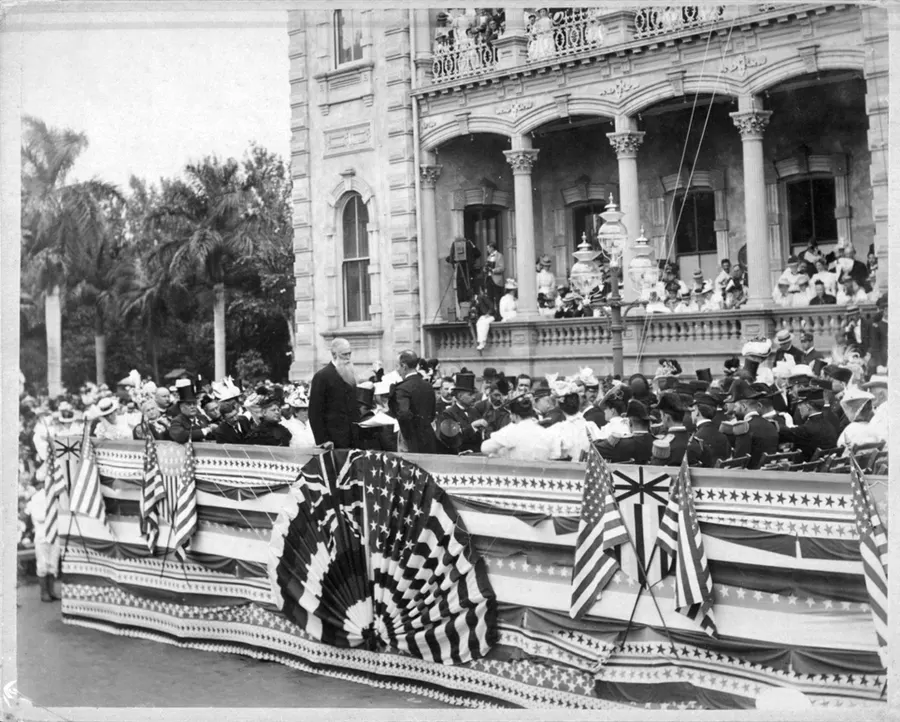
Crowds and flag-draped stands at the annexation ceremony on the steps of ʻIolani Palace, where Sanford Dole handed sovereignty to the US minister Harold SewallCrowds and flag-draped stands at the annexation ceremony on the steps of ʻIolani Palace, where Sanford Dole handed sovereignty to the US minister Harold SewallImage: Frank Davey · Public domain
politics · Oceania

The Hawaiian flag is lowered over ʻIolani Palace

In January 1893 a group of mainly American businessmen, backed by marines landed from a US warship, overthrew Queen Liliʻuokalani, the last monarch of the Hawaiian Kingdom. They set up a republic led by Sanford Dole and asked to join the United States, but a treaty of annexation failed to pass the US Senate, where many opposed it. In 1898, during the war with Spain, Hawaii’s harbours suddenly looked vital to the navy, and Congress annexed the islands by a joint resolution instead, which President McKinley signed in July. On 12 August 1898, at a ceremony on the steps of ʻIolani Palace in Honolulu, the royal residence where the queen had once been held prisoner, the Hawaiian flag was lowered and the Stars and Stripes raised in its place, while Dole handed over sovereignty to the American minister, Harold Sewall. Many Native Hawaiians stayed away in protest. Hawaii became a US territory in 1900 and the 50th state in 1959, and in 1993 Congress formally apologised for the overthrow of the kingdom.

Source: Digital Archives of Hawaiʻi, Hawaiʻi State Archives: Annexation ceremonies, 12 August 1898 ↗
V
THE TWENTIETH CENTURY

The 1900s

War and peace, technological leaps, social change, politics, sport and popular culture.

1949
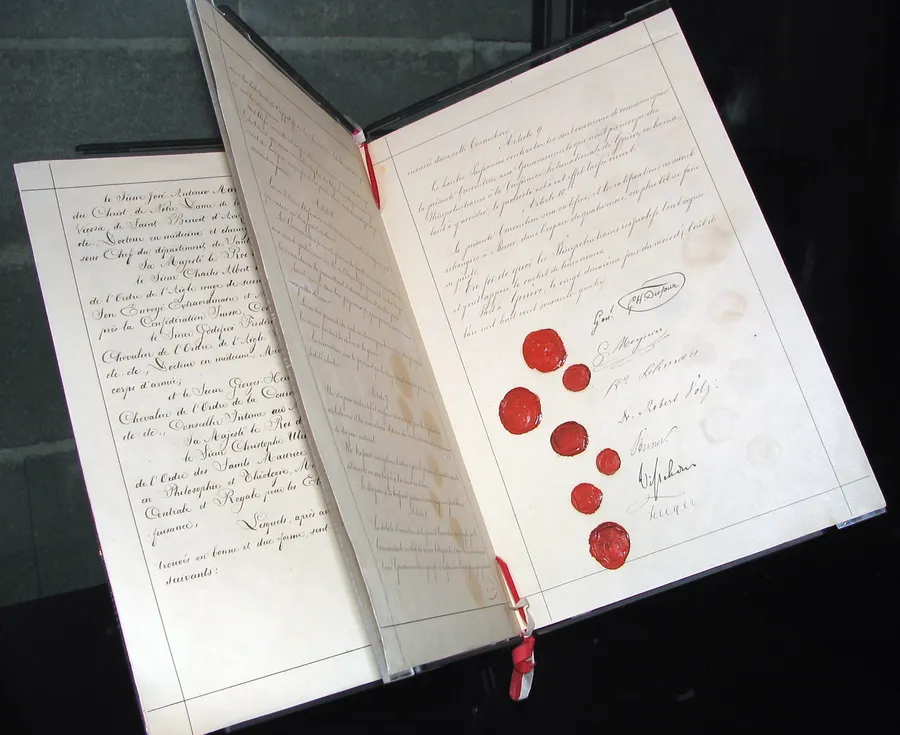
A facsimile of the first Geneva Convention of 1864, on show at the International Red Cross and Red Crescent Museum in GenevaA facsimile of the first Geneva Convention of 1864, on show at the International Red Cross and Red Crescent Museum in GenevaImage: Kevin Quinn, Ohio, US · CC BY 2.0
politics · Global

The four Geneva Conventions are adopted

The first Geneva Convention, signed in 1864 after a campaign by the Swiss businessman Henry Dunant, protected wounded soldiers and the people who cared for them. Later treaties extended the rules to war at sea and to prisoners of war, but the Second World War showed how far they fell short: millions of prisoners were starved or killed, and civilians in occupied countries had almost no protection in law. In April 1949 the Swiss government brought the world’s states to Geneva to write new rules. After four months of work the conference adopted four conventions on 12 August 1949. They cover the wounded and sick on land, the wounded, sick and shipwrecked at sea, prisoners of war, and, for the first time in a separate treaty, civilians in enemy hands and in occupied territory. An article common to all four also sets minimum rules for civil wars. The Geneva Conventions of 12 August 1949 have since been accepted by every state in the world and remain the core of the law of war.

Source: International Committee of the Red Cross: The Geneva Conventions of 12 August 1949 ↗
1978
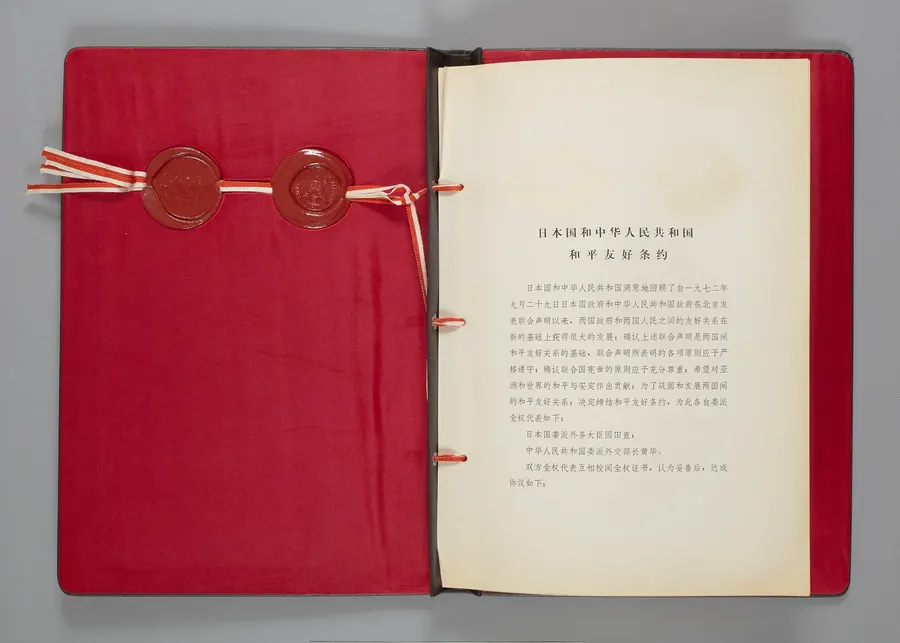
The Treaty of Peace and Friendship between Japan and China, signed in Beijing in 1978The Treaty of Peace and Friendship between Japan and China, signed in Beijing in 1978Image: Ministry of Foreign Affairs of Japan · CC BY 4.0
politics · Asia

Japan and China sign a treaty of peace and friendship

Japan and the People’s Republic of China had restored diplomatic relations in 1972, but a formal peace treaty was held up for years, partly by China’s demand for a clause against ‘hegemony’, aimed at the Soviet Union. On 12 August 1978 the two foreign ministers, Sonoda Sunao and Huang Hua, signed the Treaty of Peace and Friendship in Beijing, pledging lasting peace and mutual non-aggression. It came into force in October, when Deng Xiaoping visited Tokyo to exchange the ratifications.

Source: Ministry of Foreign Affairs of Japan: Treaty of Peace and Friendship between Japan and the People’s Republic of China ↗
1981
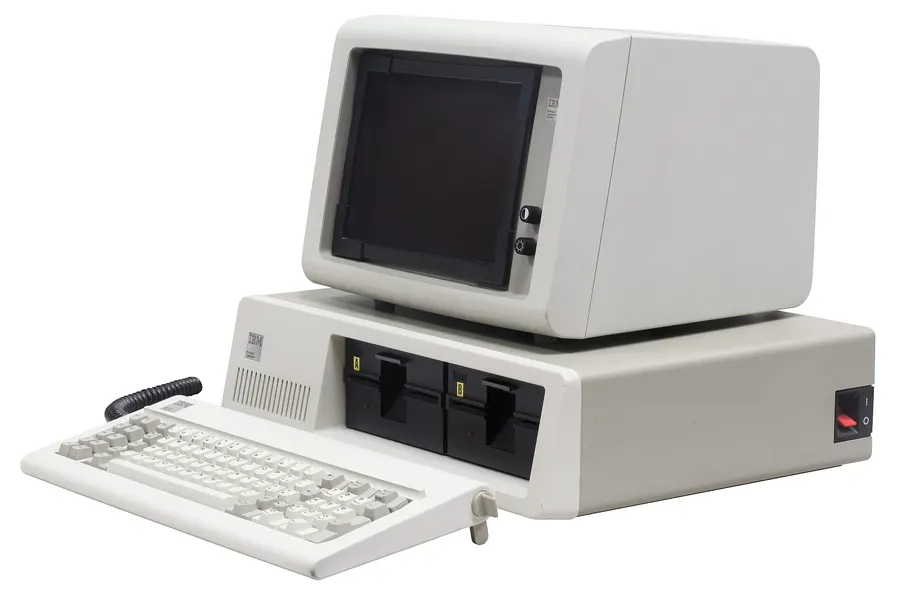
An IBM Personal Computer, model 5150, with its monitor and keyboard, on display at the Musée Bolo in LausanneAn IBM Personal Computer, model 5150, with its monitor and keyboard, on display at the Musée Bolo in LausanneImage: Rama & Musée Bolo · CC BY-SA 2.0 fr
science · Americas

IBM launches the Personal Computer

By the end of the 1970s small computers such as the Apple II and the Commodore PET were selling fast to hobbyists and small businesses, and IBM, the giant of office machines and mainframes, had nothing to offer. A small team at its plant in Boca Raton, Florida, was given about a year to build one. To move quickly they broke with IBM habit and used parts bought from outside: a 16-bit Intel 8088 processor running at 4.77 MHz, and an operating system, PC DOS, licensed from a young company called Microsoft. IBM announced the Personal Computer, model 5150, on 12 August 1981. The cheapest version cost $1,565 and had 16 kilobytes of memory and no disk drive. Businesses bought it in huge numbers, and more than 750,000 were sold within two years. Because its design was open and its parts could be bought by anyone, other firms were soon making cheaper ‘IBM-compatible’ machines, and the PC standard it created still shapes most desktop and laptop computers today.

Source: IBM: The IBM PC ↗
1984
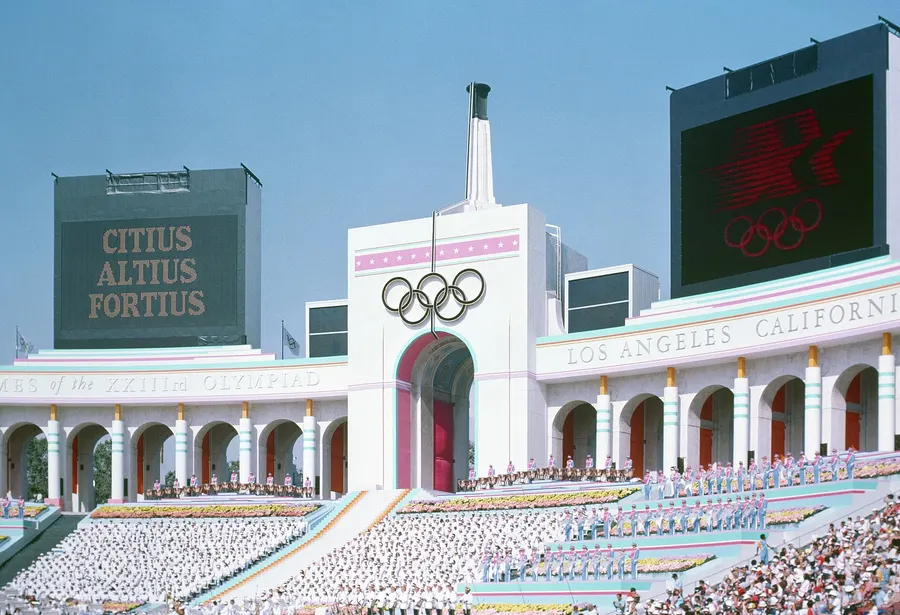
The Olympic rings on the torch tower of the Los Angeles Memorial Coliseum, where the 1984 marathon finished, photographed on the opening day of the GamesThe Olympic rings on the torch tower of the Los Angeles Memorial Coliseum, where the 1984 marathon finished, photographed on the opening day of the GamesImage: unknown, U.S. Air Force · Public domain
sport · Europe

Carlos Lopes wins Portugal’s first Olympic gold in the marathon

Carlos Lopes had won a silver medal in the 10,000 metres at the Montreal Olympics in 1976, but by 1984 he was 37, an age at which most distance runners have retired. Two weeks before the Los Angeles marathon he was hit by a car while training; he rolled over the bonnet and escaped with minor injuries. The race began at 5 p.m. on 12 August 1984, the last day of the Games, in warm weather. Lopes stayed with the leaders until about 35 kilometres, then pulled away and ran into the Coliseum alone, winning in an Olympic record of 2 hours 9 minutes 21 seconds, 35 seconds ahead of Ireland’s John Treacy, with Charlie Spedding of Britain third. It was Portugal’s first Olympic gold medal in any sport, and his record stood for 24 years.

Source: Olympedia: Marathon, men, 1984 Summer Olympics ↗
1988
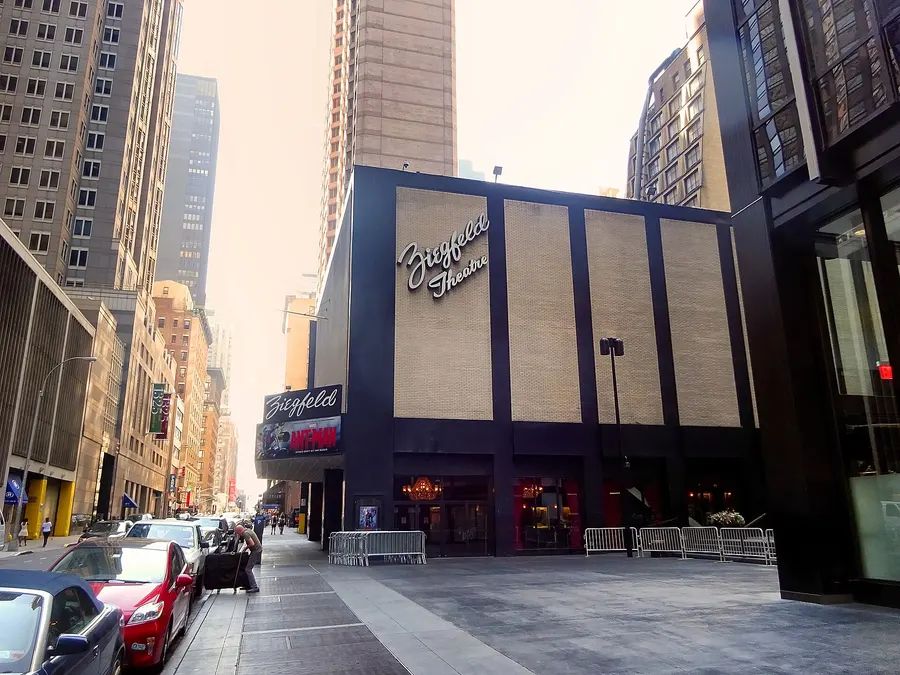
The Ziegfeld Theatre in Manhattan, one of the New York cinemas where the film openedThe Ziegfeld Theatre in Manhattan, one of the New York cinemas where the film openedImage: Tero Koistinen · CC BY-SA 4.0
culture · Americas

Scorsese’s The Last Temptation of Christ opens amid protests

Martin Scorsese had wanted for years to film The Last Temptation of Christ, a 1955 novel by the Greek writer Nikos Kazantzakis that shows Jesus as a man torn between his divine mission and ordinary human desires. With a screenplay by Paul Schrader and Willem Dafoe as Jesus, the film ends with a long dream sequence in which Jesus, on the cross, imagines being rescued and living out a normal life with a wife and children, before he chooses to die. Months before release, Christian groups who called the film blasphemous organised campaigns against it, and Universal Pictures brought the opening forward by several weeks. It opened in New York, Los Angeles and a few other cities on 12 August 1988, when, according to the AFI Catalog, about 25,000 people picketed Universal Studios. Several cinema chains refused to show it and some cities and countries banned it. The controversy drew audiences, and Scorsese was nominated for the Academy Award for best director.

Source: AFI Catalog: The Last Temptation of Christ (1988) ↗
1990
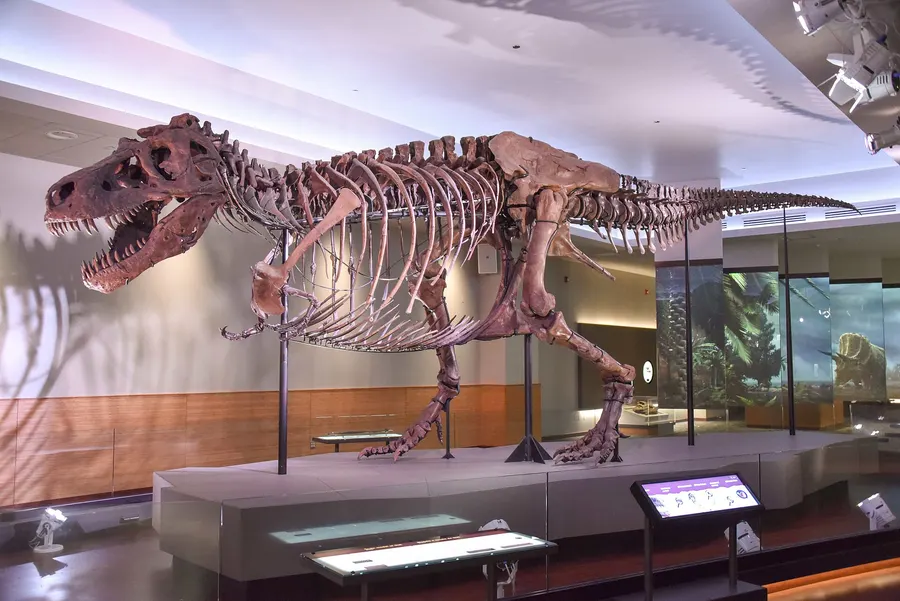
The skeleton of Sue on display at the Field Museum of Natural History in ChicagoThe skeleton of Sue on display at the Field Museum of Natural History in ChicagoImage: Evolutionnumber9 · CC BY-SA 4.0
science · Americas

Sue Hendrickson finds the T. rex that bears her name

On 12 August 1990, while the rest of her fossil-hunting team had gone into town to mend a flat tyre, Sue Hendrickson walked to a bluff near Faith, South Dakota, and spotted large bones weathering out of the rock. They belonged to the largest and most complete Tyrannosaurus rex then known. A long legal fight over who owned it followed, and in 1997 the Field Museum in Chicago bought the skeleton at auction for more than $8 million. Sue has been on display there since 2000.

Source: Field Museum: SUE the T. rex ↗
VI
2000 TO TODAY

Modern Day

The events of recent decades that have already become part of the historical record.

2000
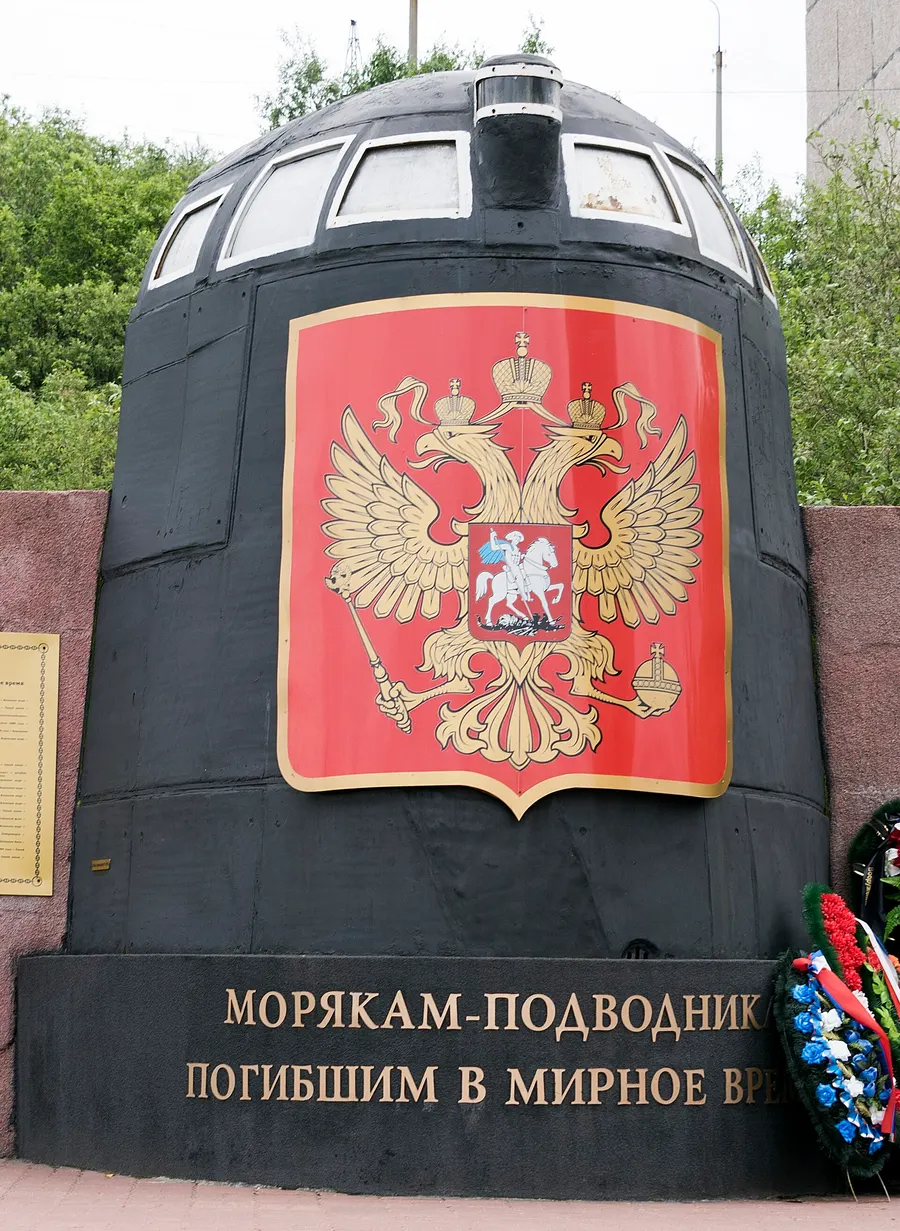
The memorial in Murmansk to submariners lost in peacetime, built around the fin of the KurskThe memorial in Murmansk to submariners lost in peacetime, built around the fin of the KurskImage: Christopher Michel · CC BY 2.0
world · Europe

The Russian submarine Kursk sinks in the Barents Sea

The Kursk, one of the largest attack submarines in the Russian Northern Fleet, was taking part in a naval exercise in the Barents Sea when two explosions, most likely set off by a faulty torpedo, tore through her bow on 12 August 2000 and sent her to the seabed. All 118 men aboard died, though some survived for hours in the stern. Russia was slow to accept help from abroad, and Norwegian divers reached the hull only on 21 August. The wreck was raised in 2001.

Source: Britannica: Kursk submarine disaster ↗
2018
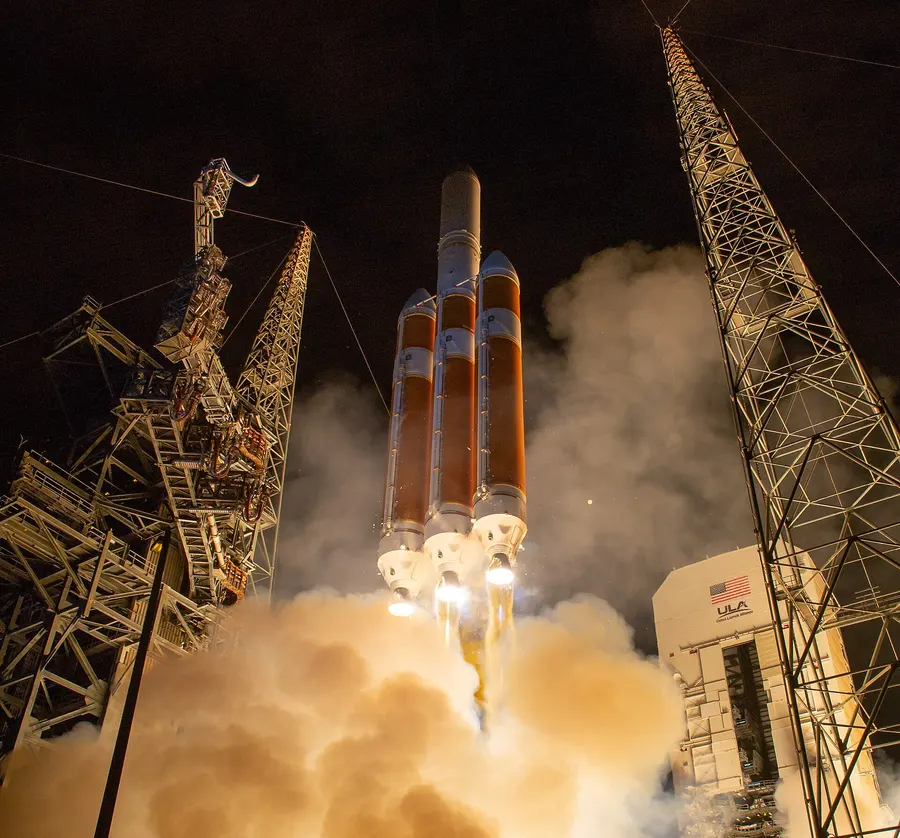
A Delta IV Heavy rocket lifts off from Cape Canaveral with the Parker Solar Probe on 12 August 2018A Delta IV Heavy rocket lifts off from Cape Canaveral with the Parker Solar Probe on 12 August 2018Image: Bill Ingalls · Public domain
science · Americas

NASA launches the Parker Solar Probe towards the Sun

At 3.31 in the morning of 12 August 2018 a Delta IV Heavy rocket lifted off from Cape Canaveral in Florida carrying the Parker Solar Probe, a spacecraft built to fly through the Sun’s outer atmosphere, the corona. It was the first NASA mission named after a living person, Eugene Parker, who had predicted the solar wind in the 1950s. Protected by a thick heat shield and using flybys of Venus to spiral ever closer, it became the first spacecraft to pass through the corona in 2021.

Source: NASA Science: Liftoff! The ULA Delta IV Heavy rocket clears the launch pad with NASA’s Parker Solar Probe ↗
RESEARCH

Sources & Further Reading

Selected authoritative references supporting the events on this page.

Britannica: Godfrey of Bouillon↗Wikipedia: Battle of Ascalon↗Ilia State University repository: History of Georgia↗Britannica: David IV, king of Georgia↗Britannica: Charles V Leopold, duke of Lorraine↗Communicationes Archaeologicae Hungariae (Eötvös Loránd University): The first and the second ‘battle of Mohács’ (AD 1526, 1687)↗Argentina.gob.ar: 12 de agosto de 1806, la Reconquista de Buenos Aires↗Museo Casa Rosada: Las invasiones británicas↗Animal Studies Journal (University of Wollongong): Stripes faded, barking silenced, remembering quagga↗Britannica: Quagga↗Digital Archives of Hawaiʻi, Hawaiʻi State Archives: Annexation ceremonies, 12 August 1898↗National Park Service: ʻIolani Palace, a Hawaiian place of history, power and prestige↗International Committee of the Red Cross: The Geneva Conventions of 12 August 1949↗Britannica: Geneva Conventions↗Ministry of Foreign Affairs of Japan: Treaty of Peace and Friendship between Japan and the People’s Republic of China↗Ministry of Foreign Affairs of Japan: Diplomatic Bluebook 1978, promotion of relations with other countries↗IBM: The IBM PC↗Smithsonian National Museum of American History: IBM PC 5150 microcomputer processor↗Olympedia: Marathon, men, 1984 Summer Olympics↗World Athletics: On its 35th anniversary, remembering Lopes’ historic sub-2:08 marathon↗AFI Catalog: The Last Temptation of Christ (1988)↗Free Speech Center, Middle Tennessee State University: The Last Temptation of Christ↗Field Museum: SUE the T. rex↗Britannica: Sue↗Britannica: Kursk submarine disaster↗Wikipedia: Russian submarine Kursk (K-141)↗NASA Science: Liftoff! The ULA Delta IV Heavy rocket clears the launch pad with NASA’s Parker Solar Probe↗NASA: Parker Solar Probe↗
WHY THESE MOMENTS?

Significance before volume

This page is not the longest possible list of events. It is a chronological journey through 12 August, where each entry is chosen for historical significance, human interest and reliability.

Facts are checked against authoritative museums, archives, universities and reference works. Where sources disagree, the page says so.

EXPLORED THE DEEPER STORY?

Return to the highlights of 12 August

Discover the lighter side of the date with famous birthdays, culture, firsts and lives remembered.

Explore This Day →
← PREVIOUS DAY11 August
HISTORY & TIMELINE12 August
NEXT DAY →13 August