
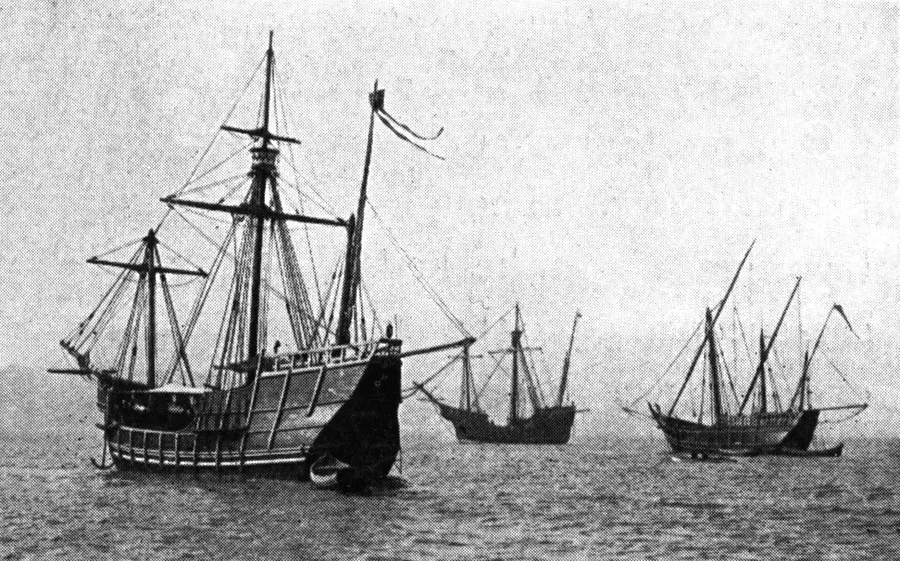
 Replicas of the Pinta, the Niña and the Santa María on the Hudson River in New York, after crossing from Spain for the Chicago World’s Fair of 1893Image: E. Benjamin Andrews · Public domain
Columbus sails from Palos on his first voyage west
For years the Genoese navigator Christopher Columbus had tried to persuade the rulers of Portugal and then Spain to back a voyage west across the Atlantic, which he believed would bring him quickly to Japan, China and the riches of the Indies. In April 1492, soon after the fall of Granada, Ferdinand and Isabella finally agreed. He was given three ships at Palos, a small port on the Río Tinto in south-western Spain: the Santa María, his flagship, and two lighter caravels, the Pinta and the Niña, commanded by the local seafaring brothers Martín Alonso and Vicente Yáñez Pinzón. At dawn on 3 August 1492 the little fleet, with about 90 men aboard, left Palos and headed first for the Canary Islands to pick up the easterly trade winds. After a long stop for repairs it sailed west into the unknown in September, and on 12 October the crews sighted an island in the Bahamas. Columbus never accepted that he had not reached Asia, but his voyage began lasting contact between Europe and the Americas, with vast consequences for the peoples on both sides of the ocean.
Source: Britannica: Christopher Columbus, the first voyage ↗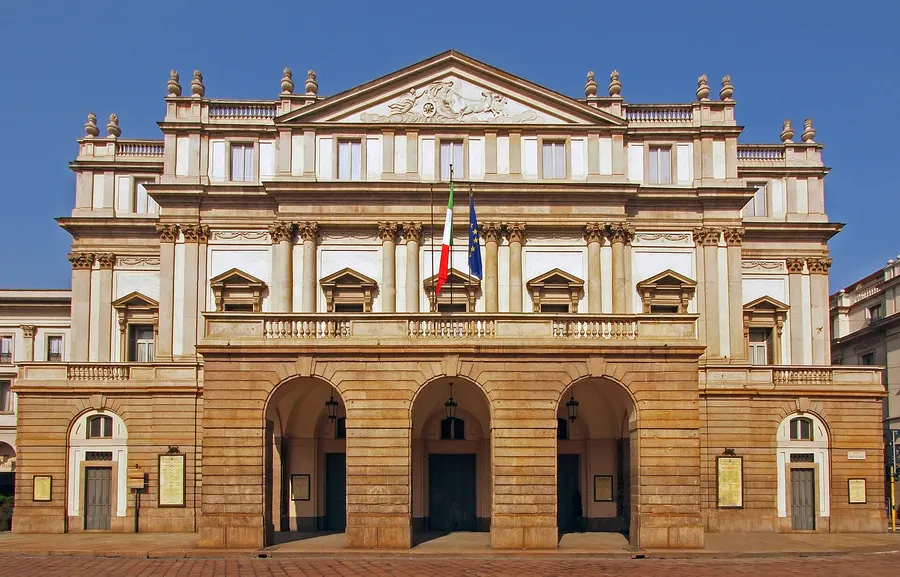 The neoclassical front of the Teatro alla Scala in Milan, designed by Giuseppe PiermariniImage:
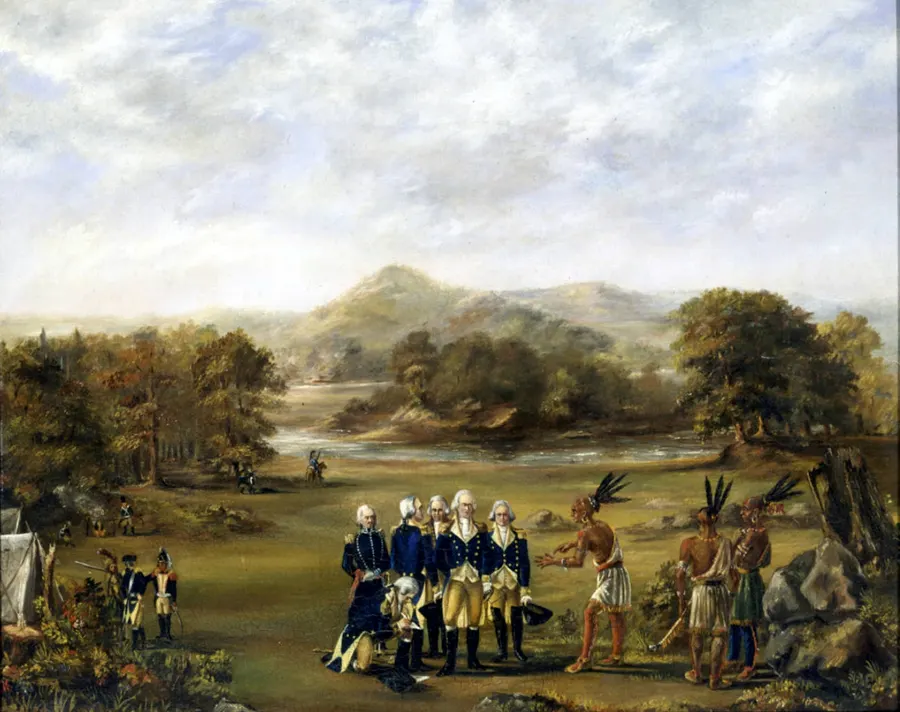 The Treaty of Greenville, painted by an unidentified artist around the time; the central figures are believed to be General Anthony Wayne and Little TurtleImage:
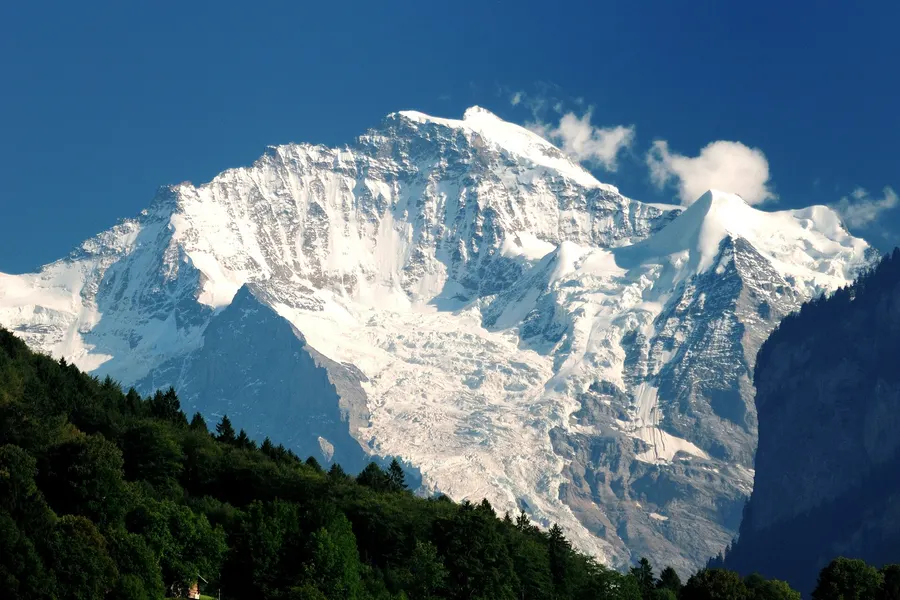 The Jungfrau in the Bernese AlpsImage:
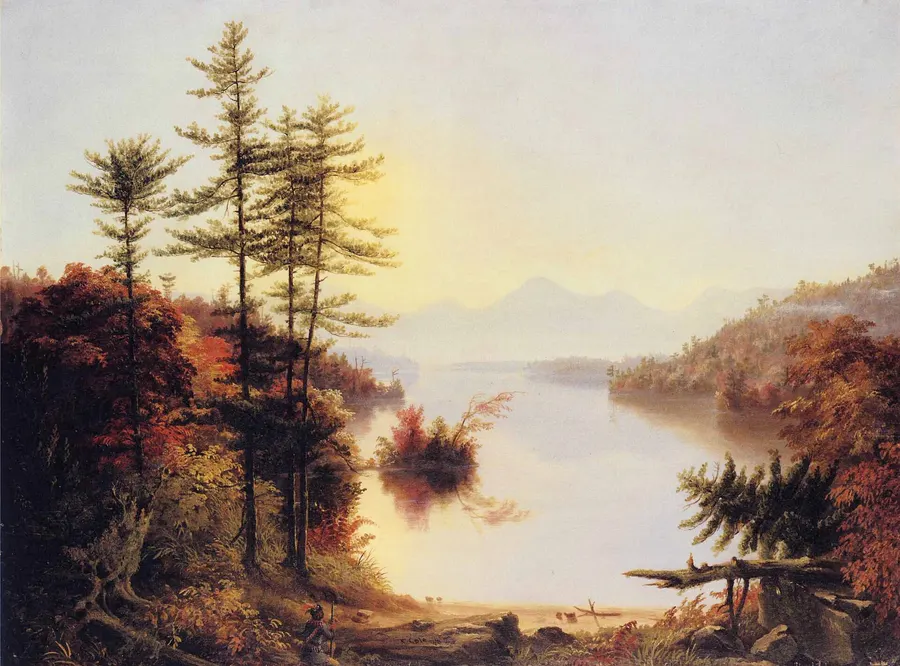 View on Lake Winnipiseogee, painted by Thomas Cole in 1828, of the New Hampshire lake where the first race was rowedImage:
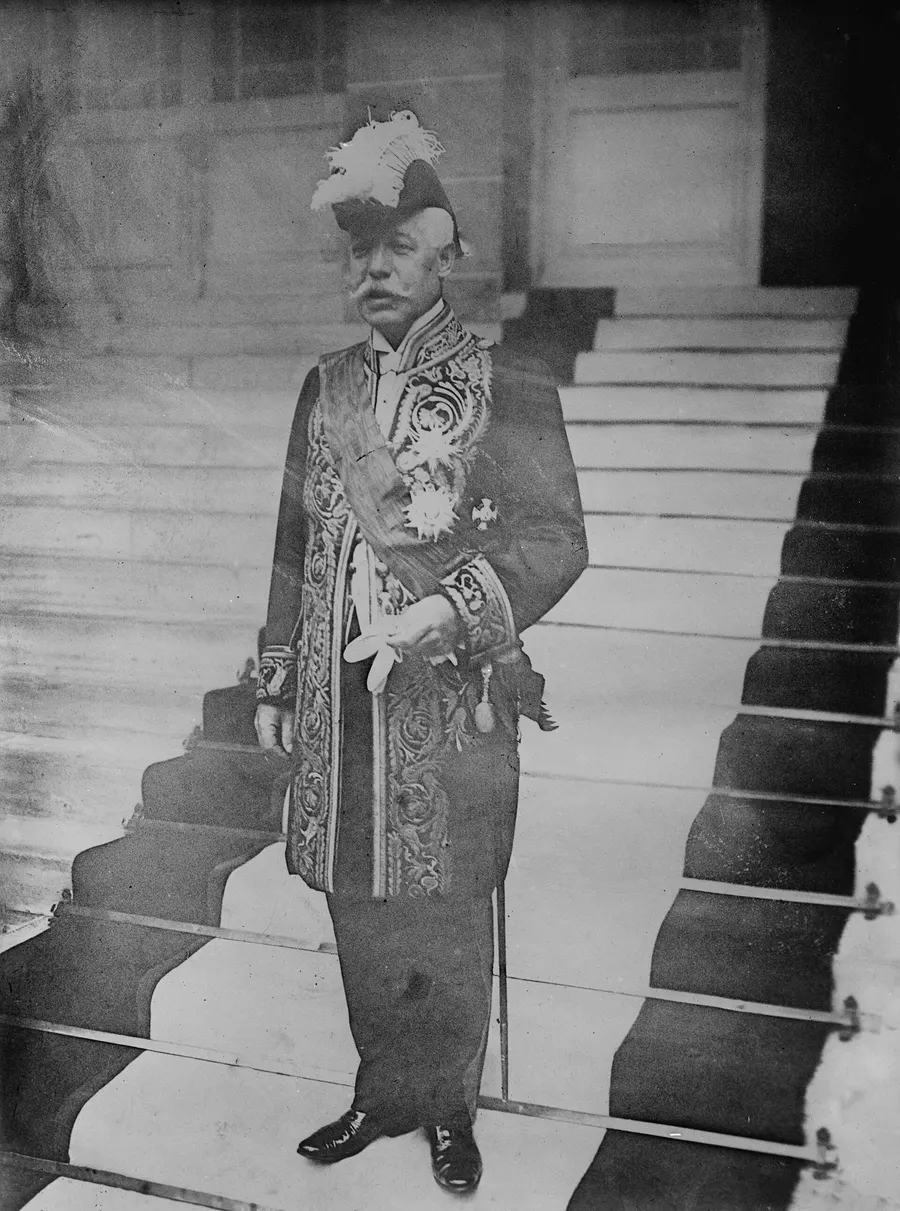 Baron Wilhelm von Schoen, the German ambassador in Paris, who delivered Germany’s declaration of war to the French governmentImage:
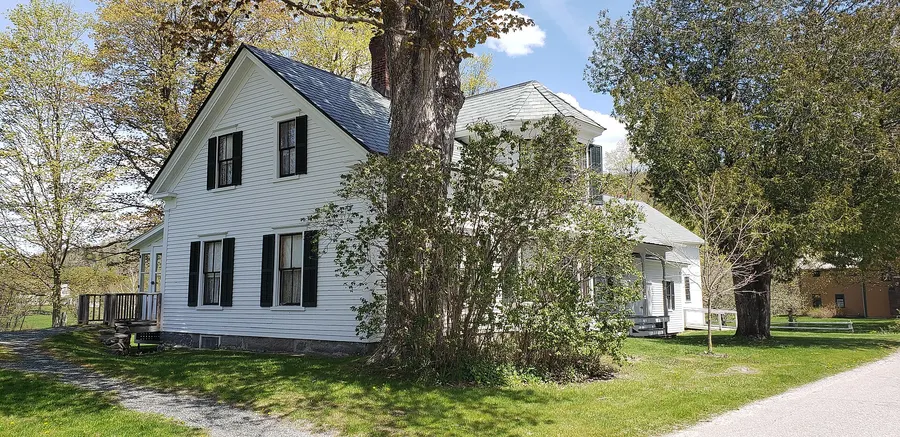 The Coolidge homestead at Plymouth Notch, Vermont, where Calvin Coolidge took the oath of officeImage:
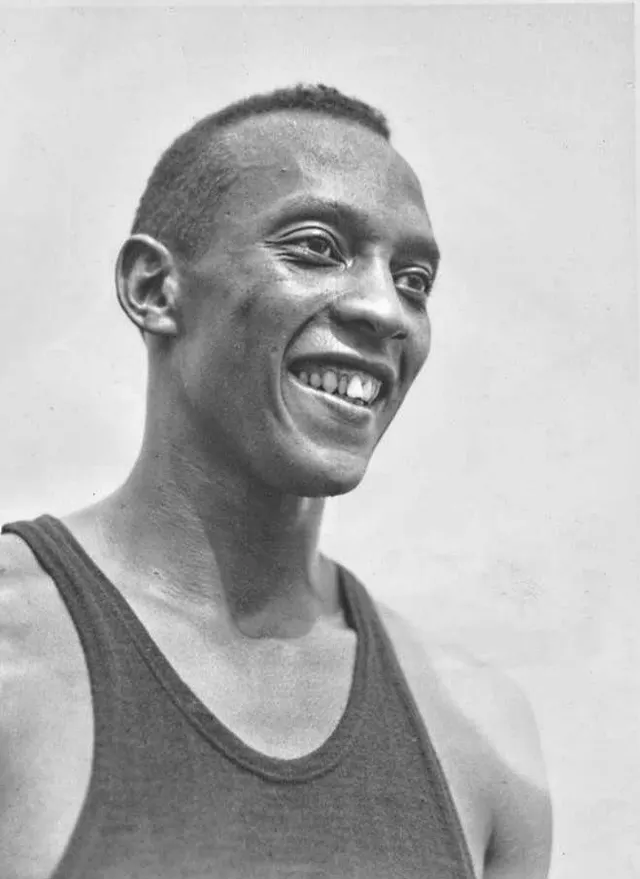 Jesse Owens in July 1936, a few weeks before the Berlin OlympicsImage:
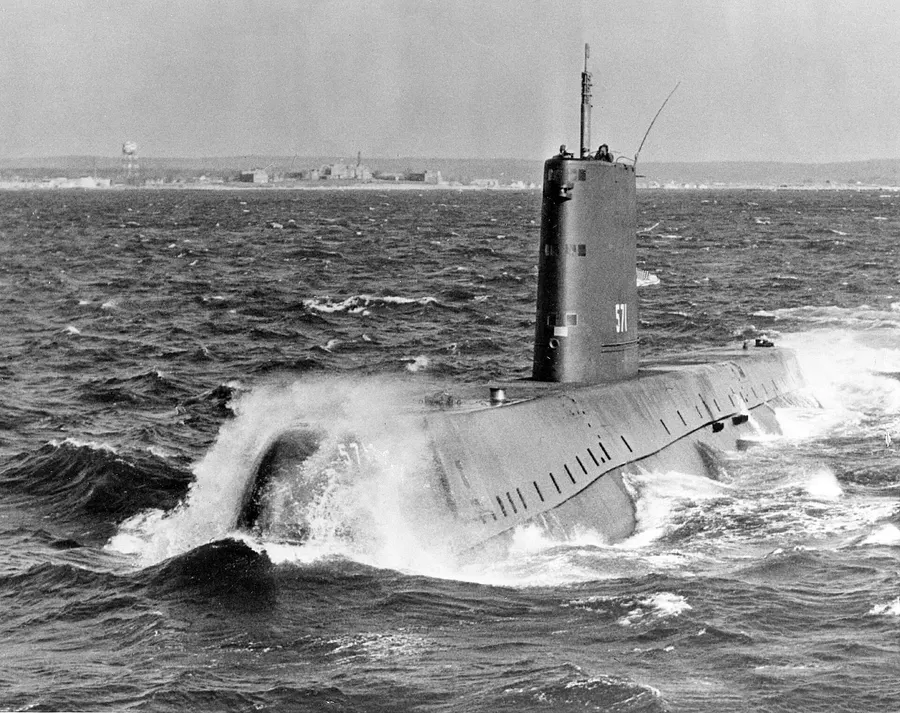 USS Nautilus, the world’s first nuclear-powered submarine, under way at seaImage:
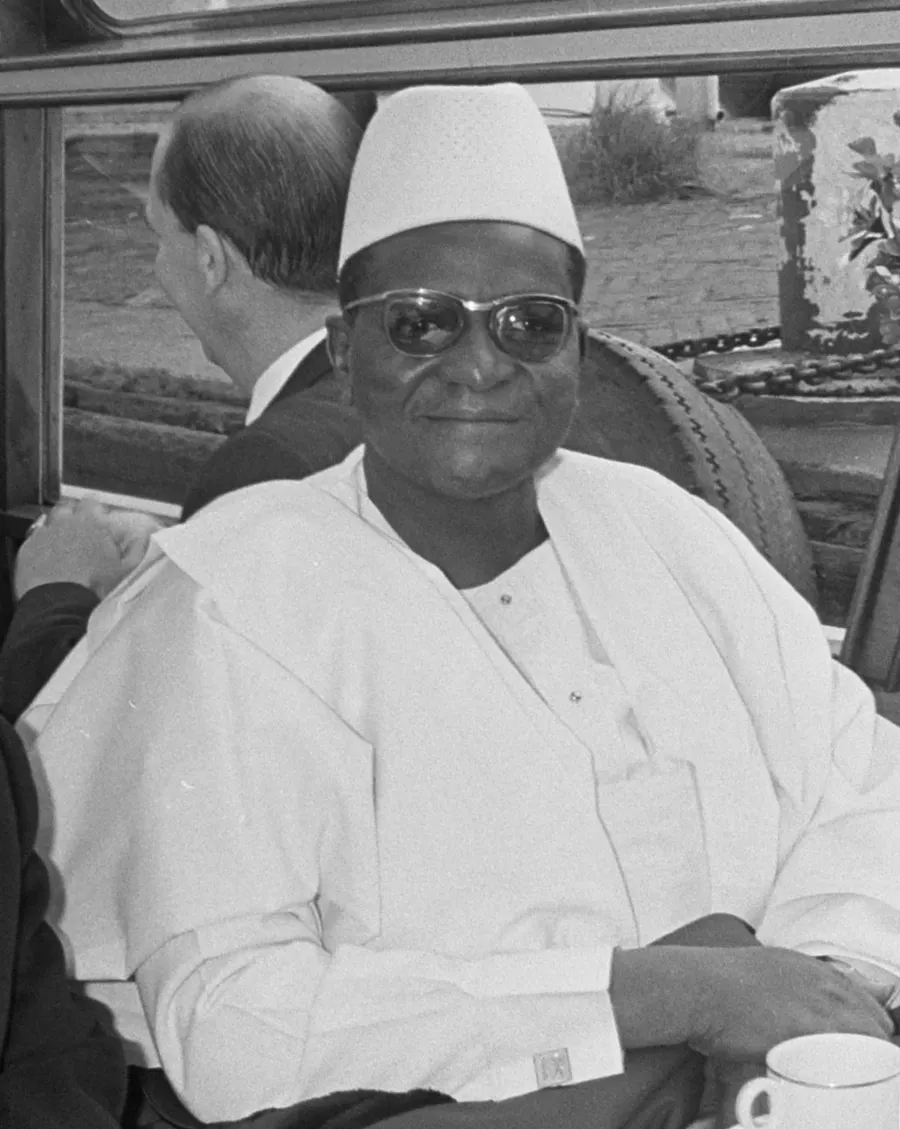 Hamani Diori, Niger’s first president, photographed on a visit to the Netherlands in October 1968Image:
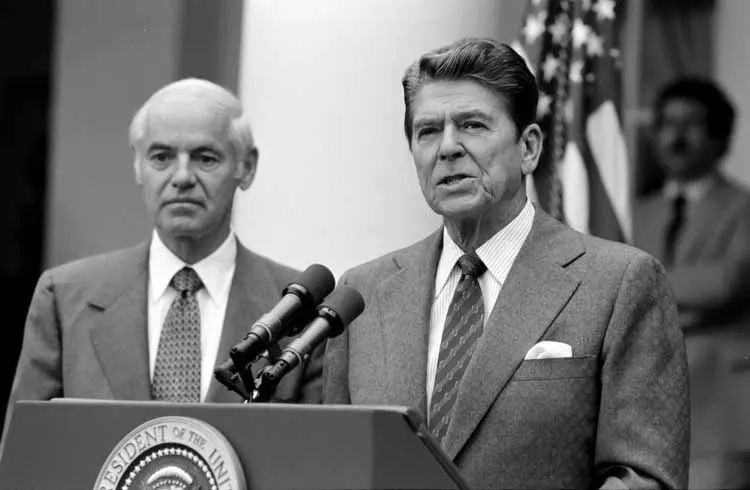 President Ronald Reagan, with Attorney General William French Smith, speaks about the air traffic controllers’ strike in the White House Rose Garden on 3 August 1981Image:
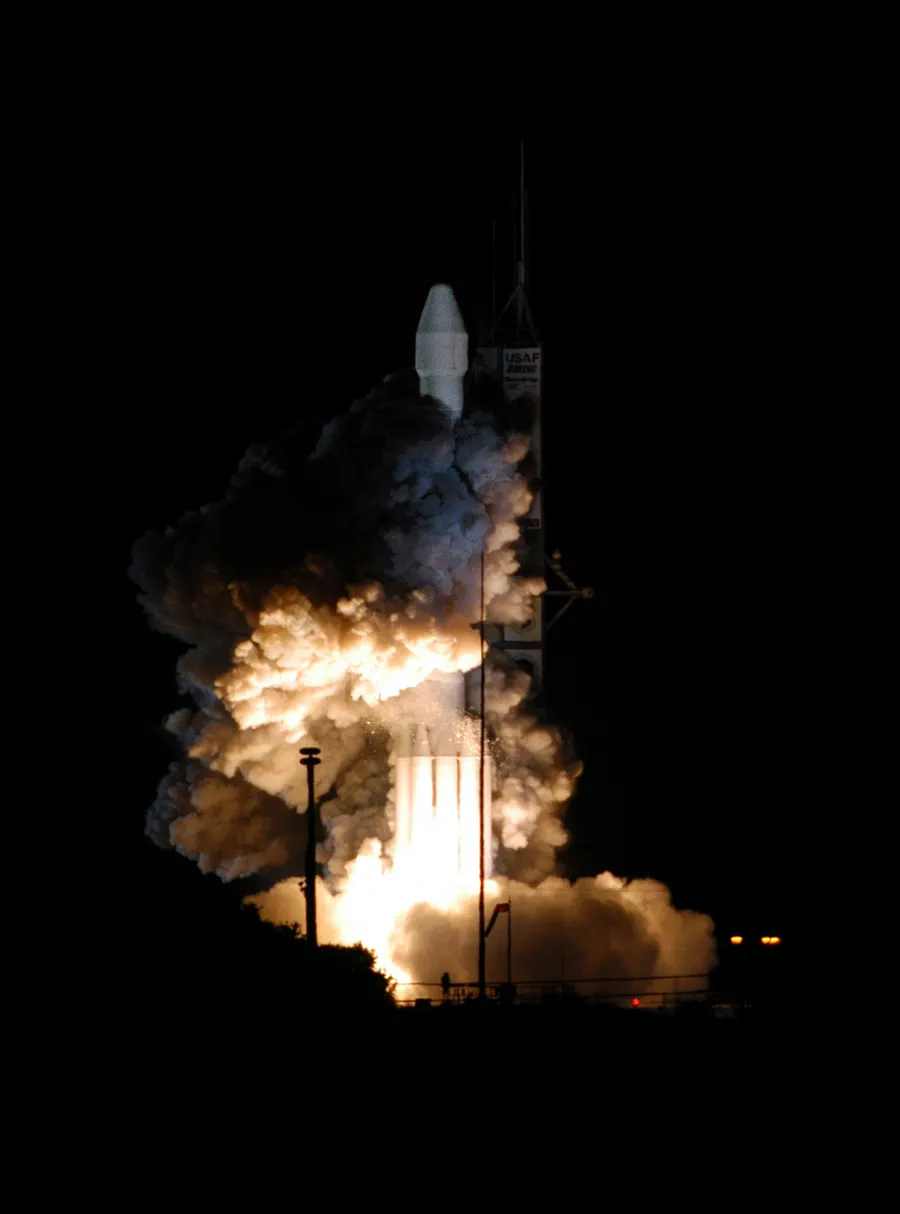 MESSENGER lifts off from Cape Canaveral on a Delta II rocket in the early hours of 3 August 2004Image: